

Deferring taxes legally while growing a real estate portfolio is one of the most powerful strategies available to investors, and most people never execute it correctly.
On a recent episode of the Falls Home Front, I sat down with Brendan Lewis, Vice President and State Manager for Texas and Oklahoma at Asset Preservation Inc. This company is one of the nation’s leading qualified intermediary firms for 1031 tax-deferred exchanges.
Here’s a snippet of our conversation:
What followed reshaped how I think about Wichita Falls real estate investing and long-term wealth preservation for every client I serve.
Listen to the full episode:
Why I Brought Brendan Lewis to the Show to Discuss 1031 Tax-Deferred Exchanges
The Falls Home Front supports North Texas real estate with a focus on wealth retention. Brendan started in real estate at 16, got licensed before high school graduation, and shifted to commercial real estate during the 2007-2009 downturn, specializing in tenant and landlord representation.
After years in brokerage, Brendan moved into real estate development and title, mastering transactions. Over 13 years ago, he entered the qualified intermediary field at Asset Preservation Inc. in Texas. He understands deal-making pressures, landlord-tenant dynamics, and closing complexities, leading a top QI firm with deep transaction insight.
For any investor beginning to think about long-term portfolio planning, understanding how real estate builds sustainable wealth in Wichita Falls is the foundation before any exchange conversation begins.
The IRS guidance on like-kind exchanges, originating from Section 1031 of the Internal Revenue Code in 1921, allows deferring taxes on qualifying investment property sales. Brendan’s expertise makes him a valuable resource for investors in Texas and Oklahoma.
Debunking Fatal Misconceptions About 1031 Tax-Deferred Exchanges
An alarming insight from Brendan is how easily an investor can unintentionally kill an exchange before it starts due to fund timing. Investors often contact me post-sale with cash ready, but as Brendan stressed, that call is too late.
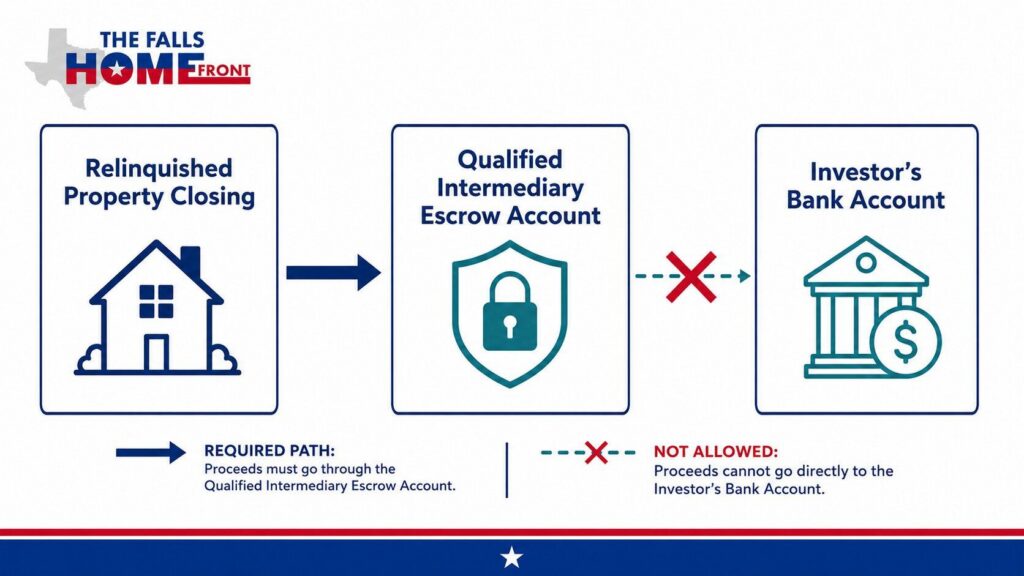
Under the Internal Revenue Code, a taxpayer cannot have actual or constructive receipt of the sale proceeds. For a valid 1031 tax-deferred exchange, a qualified intermediary must step into the transaction before the closing occurs.
The QI manages contract rights, secures proceeds in a separate account, and ensures documentation to maintain tax deferral. If the sale closes and funds reach the taxpayer, there’s no fix. Agreements and the W-9 form must be completed before closing. Contacting the QI afterward is futile.
The Danger of Doing It Alone
Another common myth is that any neutral third party can manage the exchange process. Technically, a disinterested party can serve as the intermediary under the legal definition. But this entire industry is completely unregulated. There is no licensing board, no federal oversight body, and no minimum standard for who can call themselves a qualified intermediary.
Your local attorney, your CPA, or a single-person shop can hold the position in name. But none of those arrangements provides the structural safeguards required when millions of dollars of investment capital are on the line.
Asset Preservation Inc., a subsidiary of Stewart Title, ensures client exchange funds are kept in separate accounts at major financial institutions.
Understanding how exchanger funds are protected at the institutional level gives investors and their agents a clear benchmark for what real structural safeguards look like and why the choice of a QI firm carries as much weight as any other professional in the transaction.
When a 1031 Exchange Fails to Make Financial Sense
I genuinely appreciated Brendan’s transparency throughout our conversation. He did not pitch the 1031 tax-deferred exchange as a universal solution. He was direct about the scenarios where completing an exchange can actually hurt an investor more than simply paying the tax would.
“There are certainly situations where it doesn’t make sense. I would say if the gain is not substantial, it probably doesn’t make sense. There are a couple of different things to look at. And it’s also important to remember you’re not just deferring capital gains. You’re also deferring things like depreciation recapture, there may be state capital gains taxes that you’ll defer, as well as there’s another federal tax called net investment income tax that you defer as well by doing a 1031.”
As real estate professionals, we must understand that a 1031 exchange is a wealth-building vehicle, not a generic tax loophole. If fees and restructuring outweigh owed taxes, forcing an exchange limits liquidity with little return. Run numbers before committing to a strict timeline.
Brendan suggests considering the adjusted basis. If a property sells for $1,000,000 with an adjusted basis of $900,000, the $100,000 gain may not warrant the hassle of a full exchange. Paying the IRS might be simpler and more strategic.
For investors weighing that decision against the broader North Texas landscape, understanding current real estate investment opportunities in Wichita Falls can help frame where those deferred dollars could go.
Evaluating the True Tax Impact
Even when the capital gain looks small on paper, assets held for many years carry a separate and significant hit from depreciation recapture. Brendan clearly explained that a property might not appreciate, but still create a significant tax liability when sold, due to depreciation deductions claimed over time.
Depreciation recapture is taxed at a rate of up to 25 percent, applied to the portion of gain attributable to previously claimed depreciation. In many cases, this figure alone shifts the math decisively in favor of a 1031 exchange, even when the appreciation gain is limited or nonexistent.
Tax Type | Deferrable via 1031? | Impact on Real Estate Investors |
Federal Capital Gains | Yes | Taxes are profits made from property appreciation. |
Depreciation Recapture | Yes | Taxes accumulated depreciation deductions at a rate up to 25%. |
Net Investment Income Tax (NIIT) | Yes | An additional 3.8% tax on high-earning investment portfolios. |
State Capital Gains | Yes | State-level tax liabilities (applicable outside of Texas). |
Navigating the Strict 45-Day and 180-Day Timelines
Once an investor commits to a 1031 tax-deferred exchange, the federal clock starts immediately. The day after the relinquished property closes is Day One. From that moment, the investor has exactly 45 days to formally identify potential like-kind replacement property options, and a hard deadline of 180 days total to close on one or more of those identified properties.
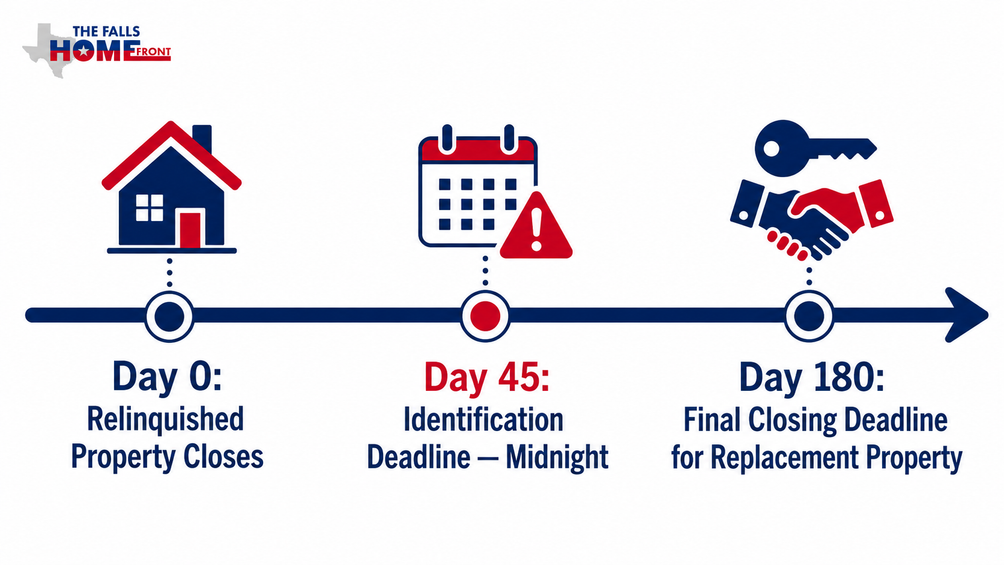
These timelines are not guidelines. They are absolute federal requirements. The identification paperwork must be signed, completed, and delivered to the qualified intermediary by midnight on Day 45. If that deadline passes without a valid submission, the exchange fails, and the full tax liability triggers immediately. There is no grace period and no second chance.
No Room for Extensions
I asked Brendan if extensions are ever granted due to the challenging North Texas market. His response was clear: only if the property is in a federally declared disaster area. Recent exceptions include wildfires in Hawaii and California and the COVID-19 pandemic.
The 45-day and 180-day deadlines are firm, emphasizing the need for early planning as the 45-day window arrives quickly, particularly if replacement properties aren’t identified before the sale closes.
For a current read on what North Texas inventory conditions look like heading into any exchange timeline, the latest Wichita Falls housing market update can help investors set realistic expectations for how quickly a replacement property needs to be under contract.
Expanding Options with Like-Kind Replacement Property Rules
One of the most clarifying parts of my conversation with Brendan was the discussion on the definition of like-kind replacement property. This is an area where a large number of residential agents and first-time exchange investors completely misread the rules. Like-kind does not mean you must trade one property type for an identical one.
“Like kind doesn’t necessarily mean that you have to sell a single-family rental house and buy a single-family rental house. As long as, really as long as it’s for business use or for use in, or for investment use, pretty much qualifies, right? So anything in the world of commercial real estate qualifies. I’ve not come across a commercial asset that can’t be exchanged. When it comes to the residential side of things, we’re looking at rental houses and things like that, duplex, triplex, fourplex, things of that nature.”
Sophisticated investors adjust their portfolio’s risk by selling single-family homes and reinvesting in commercial properties, apartments, or development land, all tax-free and without forced liquidity.
Brendan shared the example of a mechanic in Rockwall who sold his shop through two separate contracts, one for the business and one for the underlying real estate. That client used the real estate proceeds to complete a 1031 exchange into investment rental properties. Two completely different asset classes. One clean exchange.
The ability to move from high-turnover residential units into NNN commercial leases or raw land gives investors the tools to shift from active management into passive income while preserving 100 percent of their equity.
Leveraging Passive Investment Vehicles
Brendan mentioned two passive investment options for those wanting to exit active property management under Section 1031. One option is a Delaware Statutory Trust (DST), which offers fractional ownership in managed commercial properties, eliminating day-to-day responsibilities.
Brendan noted that the NAR’s advocacy around 1031 like-kind exchanges reflects a broader recognition that these structures preserve capital flow and keep investment activity moving through the economy.
He highlighted mineral deeds for Texas investors, noting they generate royalty revenue and qualify as like-kind replacement property. For retirees or those seeking flexibility without managing physical properties, mineral rights provide a passive, tax-deferred income option often overlooked in exchanges.
How Real Estate Agents Can Protect and Position Their Clients
Brendan Lewis of Asset Preservation Inc. made a direct and clear call to action for every real estate professional. Our role is not to act as tax attorneys or CPAs. But we are the first line of defense in identifying the exchange opportunity before it disappears.
“Any time the topic of investment property comes up, pretty much as long as it’s not their principal residence, the conversation should be had. Are you aware of a 1031 exchange? Having those discussions early on is the best way to set your client up for success. More often than not, maybe the client has heard of it before, but they’ve not done one. And so it’s important to educate them on the process, right? And not only in general terms, but also specific to their strategy, what they’re trying to achieve.”
If an agent waits until the closing disclosure appears before asking about a client’s tax strategy, that conversation is already too late. The discussion about a potential 1031 tax-deferred exchange must happen at the very first mention of divesting any investment property. Not at listing, not at contract, and certainly not at the closing table.
Raising the exchange option is not about giving legal or financial advice. It is about protecting the client’s financial interests and demonstrating the advanced market knowledge that separates a trusted real estate strategist from an order-taker.
Mastering Local Contracts and Disclosures
Keeping up with local paperwork is as crucial as understanding the tax code. Brendan mentioned that since late 2024, Texas has had a standard 1031 exchange addendum. Previously, agents added custom language to contracts, risking legal issues. The addendum now offers a standardized way to protect client exchange rights from the start. In North Texas, using this addendum for investment property transactions is mandatory.
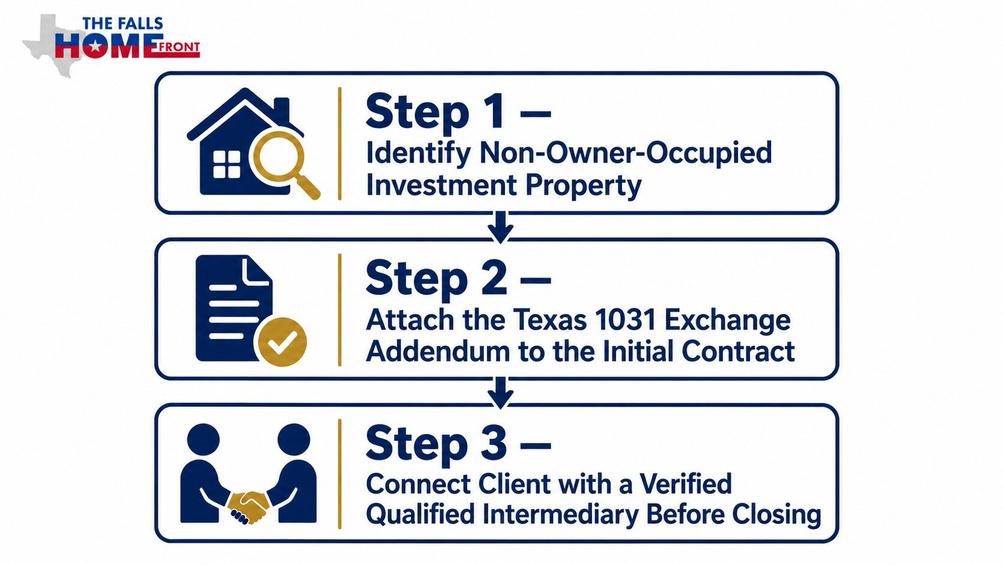
Agents ready to connect their clients with a knowledgeable intermediary can reach Brendan directly on LinkedIn or through the Texas 1031 exchange resources at Asset Preservation Inc., where the full scope of the exchange process is laid out clearly before the first contract is ever drafted.
Why This Conversation Changed My Approach to Capital Migration
This episode forced me to completely reassess how I advise clients on long-term wealth preservation. I used to treat a 1031 exchange as a transactional checkbox. If a client mentioned saving on taxes, I would flag it and move on. Now I see it as a foundational pillar of portfolio architecture that demands a full-team approach before a property ever hits the market.
Brendan mentioned that he is in the process of writing a book about what he has observed over the years in this space, specifically the common ways 1031 exchanges fail. The central theme running through those failures, he said, is planning. Or rather, the absence of it. That framing stayed with me long after we wrapped the recording.
I will ensure clients collaborate from the start for real estate wealth preservation.
When an investor considers divesting, we convene a round-table with their agent, CPA, estate attorney, and a partner like Brendan Lewis at Asset Preservation Inc. We plan 5, 10, and 20-year goals before listing the property.
That is the standard every North Texas investor deserves.
Want to hear my entire conversation with Brendan Lewis of Asset Preservation Inc about how to avoid fatal closing traps, master the 45-day identification rule, and build a tax-deferred wealth machine? Listen to the full podcast episode of the Falls Homefront right now.
Listen Here


Frequently Asked Questions
Can I use a 1031 exchange on my primary residence?
No. Section 1031 is reserved strictly for properties held for productive use in a trade or business or for investment purposes. A personal home does not qualify under any circumstance.
What happens if I find a replacement property but it costs less than the property I sold?
You can still complete the exchange, but the price difference and any cash you keep is classified as “boot.” That portion of the proceeds will be subject to capital gains taxes and depreciation recapture taxes in the year of the exchange.
Can I buy a piece of land and use the exchange funds to construct a building on it?
Yes, a Construction or Improvement Exchange requires substantial completion and identification of improvements within 180 days. It demands an experienced, qualified intermediary because of its complex timelines and documentation.
Who is Tim Lockhart, and what makes him qualified to help?
Tim Lockhart is a retired U.S. Air Force Major and Certified Military Relocation Professional (MRP) who spent his final assignment as Director of Operations at the 366th Training Squadron at Sheppard AFB. Since 2012 he’s helped 300+ families buy and sell around Wichita Falls — many PCSing in or out of Sheppard AFB — using VA loans, BAH-aware budgeting, and remote-friendly tools for tight PCS timelines. See how Tim helps military families relocate to Wichita Falls →
Apply as a Guest Speaker
Real estate is evolving. Capital is shifting. Markets are tightening. If you are actively working in the industry and solving real problems, whether in construction, finance, brokerage, or development, I would love to hear from you on the Falls Home Front.
Apply to be a guest and bring your expertise to the Wichita Falls community. It’s a great way to share your insights with a growing community of serious investors and connect with local leaders who are shaping the future of real estate.
About Tim Lockhart
Tim Lockhart is a Wichita Falls Sheppard AFB PCS Home Selling & Exit Strategy Specialist for military homeowners. He works with active duty personnel preparing for PCS moves to help them determine the right strategy for their home—whether to sell, hold, or adjust timing—before executing the plan. Tim is a REALTOR® with Keller Williams Wichita Falls and a RamseyTrusted real estate agent. He is a retired U.S. Air Force officer with over a decade of experience helping clients navigate complex, time-sensitive real estate decisions in Wichita Falls, Burkburnett, and Iowa Park. If you have PCS orders and need a clear plan for your home, schedule a consultation to map out your next step.- How a Pink-Stained Rental Disaster Led David Edwards of CoLiving Operations to a $2,000-a-Month Housing Model - October 20, 2026
- Why JC San Pedro of Amplify Credit Union Warns Buyers Not to Spend Their Full Pre-Approval - October 5, 2026
- What Is Really Happening in the Wichita Falls Housing Market This Fall? - October 2, 2026
- Why Smokey Garrett of The GO Network Believes AI Will Make Great Agents Impossible to Replace - September 28, 2026
- Why Did a Wichita Falls REALTOR® Step Up as a Founding KW Military Ambassador in Texas? - September 24, 2026
- Kelly Thompson of Shearman Roofing and Construction Explains Why the Best Roofers Slow Down First - September 22, 2026
- Lawrence Courtien of Buffalo Property Inspections on the Inspection Mistake That Costs Buyers Thousands - September 14, 2026
- Will Clark of Clark Design Studio Reveals the One Design Choice That Saves Wichita Falls Homeowners Thousands - September 8, 2026
- How Gaby Lockhart of Barrett Financial Group Turns a Lender’s No Into a Yes for Wichita Falls Buyers - September 3, 2026
- Should Military Families Hold Real Estate as an Investment Instead of Selling It? - August 27, 2026