
Eddie Speed of Note School Explains Why Becoming the Bank Beats Being a Landlord Right Now
You schedule the inspection, breathe a sigh of relief when it’s done, and then panic when a 60-page report lands in your inbox. I have seen it happen more times than I can count. That report is not a verdict. It is a tool. And most buyers confidently use it entirely wrong.
Here’s a preview of this conversation:
I covered this topic in detail with Clayton Bailey of Green Scene Home Inspections on my podcast, The Falls Homefront—and the single biggest mistake Clayton sees will surprise you. That mistake is thinking the inspection is the finish line, not the starting gun.
The Mistake I See Buyers Make Over and Over Again
I remember a client who called me three days after closing. She was crying. The report had mentioned a small footnote about a roof flashing issue. She never read that page. Now water was leaking into her nursery.
I see the same pattern every week. Buyers think the inspection is the finish line. In reality, it’s the starting gun. A helpful guide on home inspections can help you prepare, but understanding the process itself is key.
Here is how Clayton Bailey founder of Green Scene Home Inspections explains the misconception:
"The biggest misconception is, whew, we made it through the inspection. Okay, and then they're done. It's like, no, you're not done. You still have to read your reports and you only have to the end of that option period to get any other people in there to look at it."
That quote stopped me cold. Because I’ve been that agent giving highlights. And I’ve seen clients miss the window to bring in a specialist.
The Timing Mistake That Cost Buyers Thousands
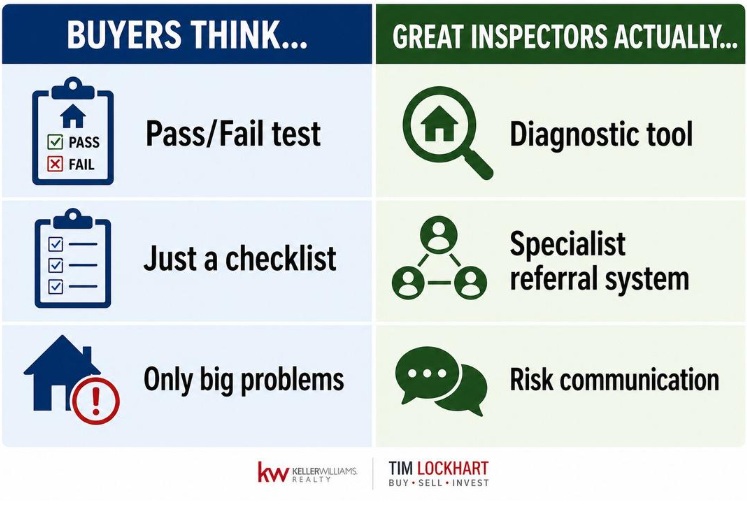
Clayton compares a home inspector to a general physician. The inspector finds the symptoms. The specialist makes the diagnosis. But you cannot call a specialist after the option period ends.
The biggest misconception is, whew, we made it through the inspection. Okay, and then they're done. It's like, no, you're not done. You still have to read your reports, and you only have until the end of that option period to get any other people in there to look at it. I see this happen all the time, where someone doesn't read their report, and they just get the highlights from their agent, and now they move in, and then they're like, well, there's this problem. Well, we talked about this, and we told you, and it's here on page 12. And did you get the roofer to look at it? Like we should have told you to in our report. And they're like, no. Well, the time for that was back during the option period.
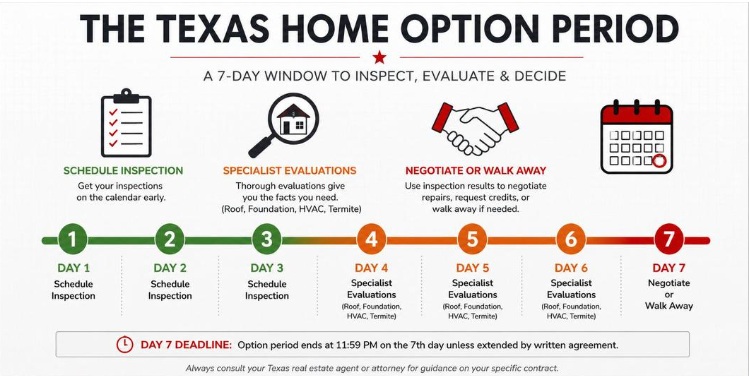
What is an option period?
It’s a negotiated window of time—typically 5 to 10 days after the contract is accepted by both parties—during which a buyer has the unrestricted right to terminate the contract for any reason and get their earnest money back. It’s the only time the buyer holds all the cards. This protection is built into every TREC-promulgated contract to reduce litigation after closing and give buyers time for due diligence.
Once the option period expires, your leverage evaporates. If you back out for a non-contractual reason after that deadline, you lose your earnest money. Simple as that.
For military buyers using VA financing, there’s an extra layer of protection built into the loan process, but even that doesn’t replace a timely, thorough inspection.
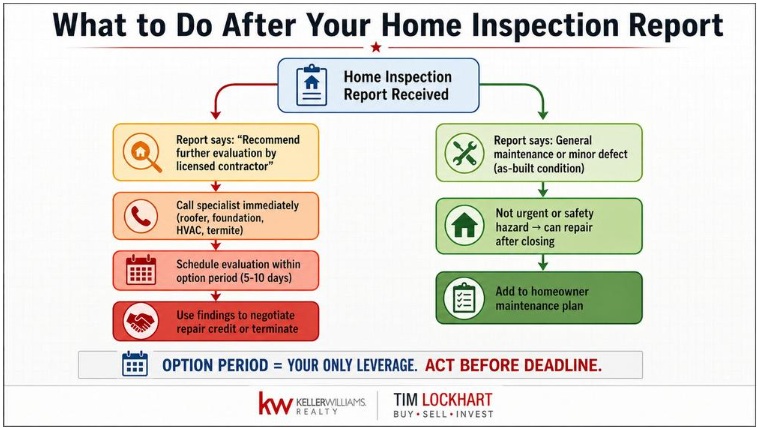
Practical takeaway: Schedule your inspection on day two or three of your option period. Read the full report the same night. Highlight every line that says “recommend further evaluation by a licensed contractor.” Then call those specialists immediately. Your option period is not a suggestion. It’s a deadline.
How Clayton Bailey of Green Scene Home Inspections Went From Graphics Design to Building a Top-Tier Business
Clayton started in graphic design, working for CBS News in Wichita, Kansas. Then the dot‑com crash collapsed that career path.
In 2008, he launched his home inspection company. It was the worst possible time to start any real estate business. His first big idea was to include an energy audit with every inspection. Agents liked him but told him bluntly they could not negotiate for energy efficiency. So he adapted. Now he circles back 12 months after closing to offer the energy assessment.
That ability to adapt and communicate clearly is what makes Clayton Bailey Green Scene Residential Inspections different. He does not just list problems. He explains them in a way that helps you make a confident, informed decision—directly from his experience with home inspections for Dallas properties.
Who Is Actually Buying Houses in North Texas Right Now?
The market has shifted dramatically. And Clayton Bailey Green Scene Home Inspections in Texas sees it clearly from the field.
"The age of the first-time home buyer was traditionally, nationally, 24 years old. Now that age has jumped to 33 years old. That's almost a decade of people stuck renting. It's sad because they can't get into and invest in themselves and live the American dream through wealth. You see a lot more investors snapping up those lower-end houses. It's making it harder for the regular, everyday, average first-time home buyer."
According to the National Association of Realtors’ 2025 Profile of Home Buyers and Sellers, the median age of a first-time buyer has now climbed to 40 years old—up from 33 just a few years ago—while their market share has collapsed to an all-time low of 21%.
Clayton also noted that homes priced at $750,000 and above are moving faster than entry‑level properties. Why? Investors with cash are competing for starter homes. And agents are being pickier about listings. No one wants to spend money on staging and photography for a seller who refuses to lower the price.
If you’re a seller trying to understand how to stage and price competitively, you can find practical advice in my seller resources section.
So what does this mean for you if you’re buying in Wichita Falls or anywhere in North Texas? Your home inspection contingency is one of your few remaining leverage points. Do not waive it unless you fully understand the risk. If you’re an investor, my dedicated investor advice page explains what to look for in a property beyond the surface-level cosmetics.
Out-of-State Surprises: Why Texas Homes Have Cracks (And Why That's Normal)
I’ve had clients from California look at a drywall crack and almost pass on a perfectly good home. Clayton hears this every single week.
"People tend to really get scared when they see the cracks. If they see a settling crack or a crack in the drywall or something like that, they immediately think the house is falling. Their minds go to worst-case scenario...That crack is not a structural failure. It is not a catastrophe. It is the result of our soil doing exactly what clay soil does. It expands when it gets wet from rain or sprinklers. It shrinks when we go through a dry spell. That movement causes minor cosmetic cracking. It is normal. It is expected. And honestly, if you buy a house in North Texas that has zero cracks, I would be suspicious. Because that probably means someone just painted over them last week."
Here is the science behind it. Texas sits on expansive clay soil—often called “black gumbo.” A Texas A&M AgriLife Extension resource notes that this soil expands when wet and shrinks when dry. That constant shrink‑swell cycle causes minor settling cracks in most homes older than a year or two. It’s not structural failure. It’s just the ground breathing.
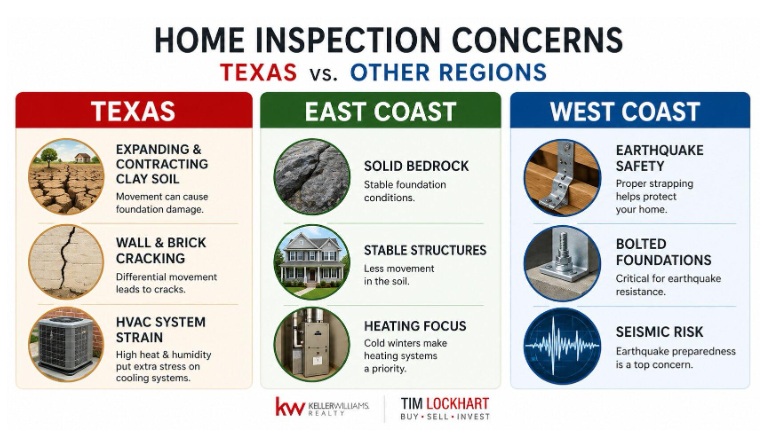
Clayton added that out‑of‑state buyers from the North always ask about the furnace.
So if you are relocating to North Texas, here is your cheat sheet:
- Cracks: Normal unless they are horizontal, stair‑step in brick, or doors and windows stick badly.
- Drainage: Critical. Water pooling near the foundation is the real enemy.
- HVAC: Pay attention to the AC unit. It will run hard for seven months a year.
For a deeper dive into foundation warning signs, Clayton wrote a detailed homeowner’s guide you can read here: Foundation shifting in Texas: a homeowner’s guide.
How Personality Types Completely Change the Way Buyers React to Inspection Reports
This part of my conversation with Clayton was a genuine wake‑up call.
He teaches a course for real estate agents and home inspectors on personality types. He calls the home inspection moment a “high cortisol moment.” Buyers go into fight‑or‑flight mode. Some lash out. Others shut down and refuse to read the report at all.
Clayton breaks buyers into four rough categories based on behavioral research and thousands of in‑person interactions:
- Analytical: Needs every data point. Will ask 40 questions. Wants spreadsheets.
- Social: Needs reassurance and connection. Wants to talk through feelings with their agent and inspector.
- Creative: Gets stuck on cosmetic flaws like stains or paint colors and cannot see past them to the home’s actual structural value.
- Direct: Wants the three biggest problems categorized by cost and urgency, then wants to move immediately.
Most couples balance each other. One spouse is analytical, the other is social. But you have to know who you are talking to in that specific moment—and adapt your communication accordingly.
I now prepare my clients emotionally before the inspection even starts. I tell them plainly: “You are about to feel like you’re getting a speeding ticket. That’s normal. But we will stick strictly to the facts, not the fear.”
To get a better idea of what buyers are actually looking for in a home today, Clayton also analyzed recent trends in the most desirable traits according to home buyers. It’s a useful reality check before you start your search.
"Your ego and your emotions will not put you in the front seat of a real estate transaction if you let them get the better of you. Recognizing that is huge. They're coming at it from a high cortisol moment, a fight-or-flight mode. They're probably not in really good, reasonable and logical decisions. They're making emotional decisions."
That quote from Clayton is now pinned to my desk. I read it before every negotiation meeting.
My New Inspection Playbook After Talking to Clayton
Before this episode, I thought I was doing enough. I would send my clients a few inspector names from a list. I would remind them to read the report. I would help negotiate the big items. But I was missing the psychological and procedural nuance.
Now I do four things differently.
- I schedule the inspection for day two or three of the option period—never day five. That gives us a real buffer for specialists.
- I walk through the entire report line by line with my clients. Not just the highlights. I want them to know where every potential issue lives and what it actually means for their wallet.
- I explain the difference between “as‑built” conditions and actual defects. As‑built simply means the house was built before a certain code existed. Unless it’s broken, causing active damage, or a direct safety hazard, it’s not a major negotiation point.
- I ask every single client: “What is your experience with homeownership?” A first‑time buyer needs a completely different conversation than someone on their third house. Clayton’s buyer checklist is a great tool to help first-timers get organized before they even start touring homes.
"The home inspection is not about passing or failing. It's about understanding the condition of the property and making a confident, informed decision. Having the right professional guiding you through that process can make all the difference."
Clayton said that at the end of our talk. It is the simplest and truest statement about home inspections I have ever heard in 15 years of selling real estate.
For a seasonal look at what your inspector is checking throughout the year, here’s a helpful guide on seasonal tips from a home inspector.
Want to hear the full conversation I had with Clayton Bailey of Green Scene Home Inspections, where he explains exactly why most buyers get the timing wrong and how to turn an inspection report into your best negotiating tool? Listen to this episode of The Falls Homefront.
Listen Here


Frequently Asked Questions
What is the most common mistake first‑time homebuyers make with their inspection?
Not reading the full report before the option period ends. Most buyers rely on their agent’s verbal summary and miss critical callouts for specialist evaluations like a roofer or foundation expert. Clayton Bailey Green Scene Home Inspection Services emphasizes that once the option period closes, you lose almost all leverage to negotiate or walk away from a problematic property costing five figures in repairs.
Should I be worried about cracks in the walls of a Texas home?
Not automatically. Texas has expansive clay soil that shrinks and swells seasonally with moisture changes. Minor settling cracks are normal. The real red flags are horizontal cracks, stair‑step cracks in brick masonry, or doors and windows that stick significantly when the soil is wet or dry. A qualified inspector will differentiate between cosmetic and structural movement every time. Clayton’s foundation shifting guide is the best resource I’ve found on this.
How does a VA loan inspection differ from a conventional loan inspection?
VA loans require higher‑integrity inspections with specific minimum property requirements. You will need an official wood‑destroying insect (WDI) report, and any safety or structural issues must be fully cleared before closing. This is a legitimate protection for veterans. It ensures the home isn’t a money pit. The U.S. Department of Veterans Affairs (VA) provides detailed guidelines. But it also means sellers may be less willing to accept a VA offer if the home has known or suspected issues.
How long does a home inspection typically take?
A thorough inspection for a single‑family home usually takes between two and three hours. Plan to attend the last hour so the inspector can walk you through the findings in person. That face‑to‑face time is invaluable for understanding what’s urgent versus what’s routine maintenance you can schedule for later.
What are the top three things real estate investors should look for in an inspection?
- Roof age and condition: A new or newer roof saves thousands of dollars immediately.
- HVAC system condition: Especially in North Texas summers, an old AC is a major liability with expensive replacement costs.
- Foundation condition: Investors want solid bones—period. Getting two of these three major systems in good shape makes a flip or rental property much more attractive.
Who is Tim Lockhart, and what makes him qualified to help?
Tim Lockhart is a retired U.S. Air Force Major and Certified Military Relocation Professional (MRP) who spent his final assignment as Director of Operations at the 366th Training Squadron at Sheppard AFB. Since 2012 he’s helped 300+ families buy and sell around Wichita Falls — many PCSing in or out of Sheppard AFB — using VA loans, BAH-aware budgeting, and remote-friendly tools for tight PCS timelines. See how Tim helps military families relocate to Wichita Falls →
Apply to Be a Guest on The Falls Home Front Podcast
Real estate is changing faster than it has in decades. Interest rates, shifting inventory, and buyer psychology are all in flux. Whether you’re an inspector, lender, contractor, or agent actively solving real problems in North Texas, I want to hear your story.
If you’re actively working in the industry and bringing a unique perspective—like Clayton Bailey of Green Scene Home Inspections did with his personality types framework or his journey from graphic design to inspections—apply now to be a guest on the show.
*This podcast is produced by the Icons of Real Estate – #1 Real Estate Podcast Network. For more resources on growing your show or refining your message, explore the podcast framework and read success stories from other industry professionals who have leveraged this platform, or apply to be a guest.*
About Tim Lockhart
Tim Lockhart is a Wichita Falls Sheppard AFB PCS Home Selling & Exit Strategy Specialist for military homeowners. He works with active duty personnel preparing for PCS moves to help them determine the right strategy for their home—whether to sell, hold, or adjust timing—before executing the plan. Tim is a REALTOR® with Keller Williams Wichita Falls and a RamseyTrusted real estate agent. He is a retired U.S. Air Force officer with over a decade of experience helping clients navigate complex, time-sensitive real estate decisions in Wichita Falls, Burkburnett, and Iowa Park. If you have PCS orders and need a clear plan for your home, schedule a consultation to map out your next step.- How a Pink-Stained Rental Disaster Led David Edwards of CoLiving Operations to a $2,000-a-Month Housing Model - October 20, 2026
- Why JC San Pedro of Amplify Credit Union Warns Buyers Not to Spend Their Full Pre-Approval - October 5, 2026
- What Is Really Happening in the Wichita Falls Housing Market This Fall? - October 2, 2026
- Why Smokey Garrett of The GO Network Believes AI Will Make Great Agents Impossible to Replace - September 28, 2026
- Why Did a Wichita Falls REALTOR® Step Up as a Founding KW Military Ambassador in Texas? - September 24, 2026
- Kelly Thompson of Shearman Roofing and Construction Explains Why the Best Roofers Slow Down First - September 22, 2026
- Lawrence Courtien of Buffalo Property Inspections on the Inspection Mistake That Costs Buyers Thousands - September 14, 2026
- Will Clark of Clark Design Studio Reveals the One Design Choice That Saves Wichita Falls Homeowners Thousands - September 8, 2026
- How Gaby Lockhart of Barrett Financial Group Turns a Lender’s No Into a Yes for Wichita Falls Buyers - September 3, 2026
- Should Military Families Hold Real Estate as an Investment Instead of Selling It? - August 27, 2026