
When a blank commercial wall transforms into a vibrant mural, something remarkable happens. Property value increases. Foot traffic follows. Neighborhood identity solidifies.
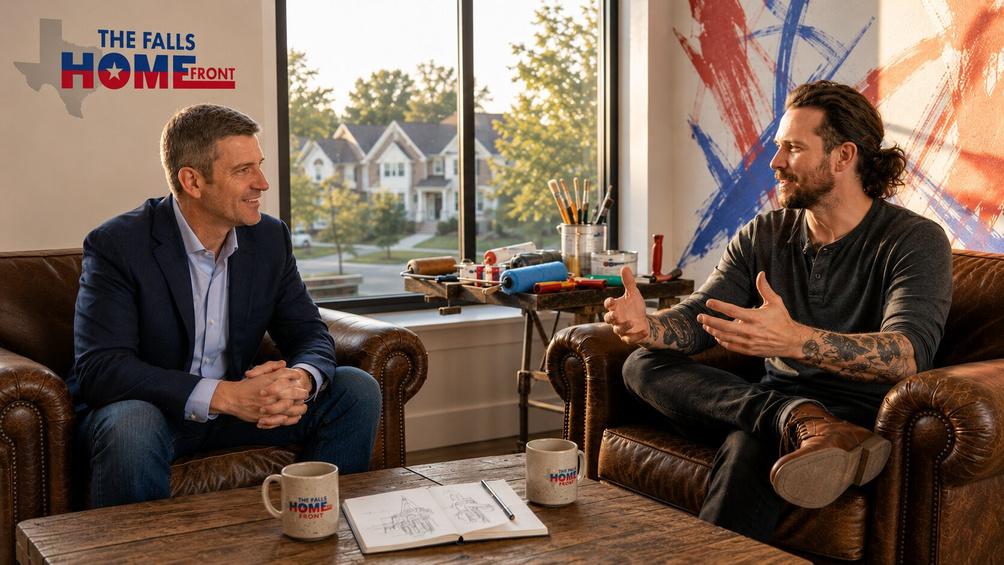
On this episode of The Falls Homefront, I sat down with David Baker, a Texas-based graphic designer and muralist who has worked with major brands like TikTok and Major League Rugby through his professional design portfolio. More importantly, he is bringing that creative expertise back to the local level through public art, small business branding, and community festivals.
Here’s a quick preview of our conversation:
As a retired Air Force officer who chose to call Wichita Falls home, I have seen firsthand how military families moving to Wichita Falls are drawn to communities that invest in culture, arts, and authentic local experiences.
Listen to the full episode:
From Corporate Agency to Creative Independence
David’s path to creative entrepreneurship wasn’t accidental. He learned creative entrepreneurship Texas style from watching his mother sell art at festivals while his father balanced the books. Build your skills. Work for the big guys. Then go build your own thing.
He attended the University of North Texas communication design program, which is notoriously competitive. Out of 150 starting students, only 30 to 40 graduate. David took six years to complete the program, spending extra time building foundational skills until his logo design portfolio reached elite levels.
That patience paid off. He landed agency work immediately after graduation, serving as creative director for major campaigns. But the tech layoffs that swept the industry forced him to reconsider his path.
This is the creative entrepreneurship Texas style. Build your skills. Work for the big guys. Then go build your own thing. Rather than fight for shrinking agency positions, David pivoted to independent contracting. The transition proved more lucrative than expected. It also gave him something agency work never could: creative freedom.
The Business Reality Behind Creative Work
Most people imagine artists waiting for inspiration to strike. David shattered that myth completely.
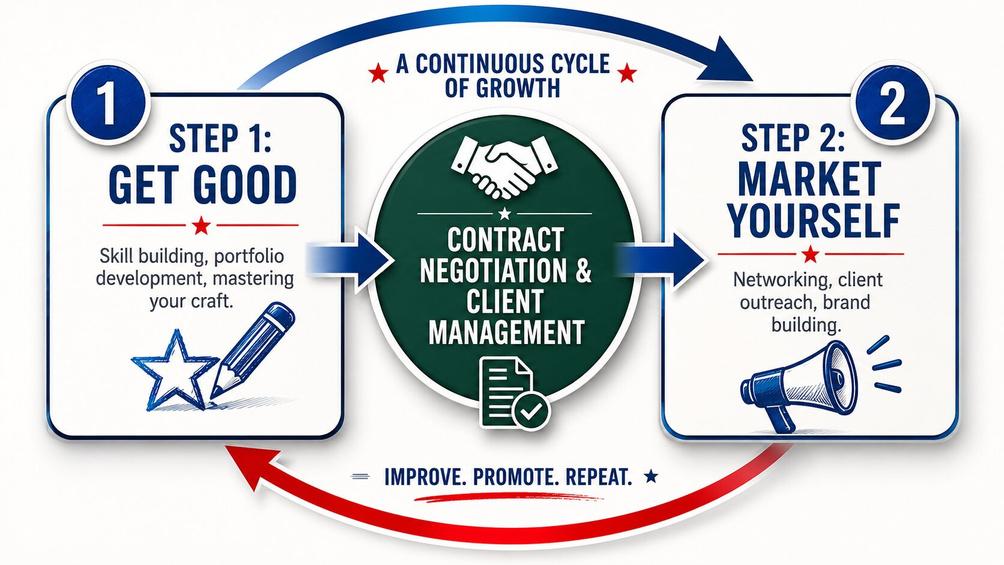
He broke down his operational framework into two simple steps. Step one: get good. Step two: market yourself. The better you are at step one, the easier step two becomes.
But here is what young creatives often miss. The business side takes as much time as the creative side. Negotiating contracts, writing proposals, managing client expectations, and building a pipeline of work consume half of his working hours.
“I think what ultimately a lot of young creative people don’t realize about the business of art is that the business side of art is really, really, really important just in the same way that it is any industry. There are really two ways to kind of make it in this industry. Step one is to get good, and step two is to market yourself. The better you are at step one, the easier step two will be. Marketing yourself, networking, and getting your name out there, unfortunately, sometimes takes more time than the actual creation side of it. And in addition to that, just negotiating and writing contracts and getting gigs, that takes up a lot of time.”
For real estate professionals listening, this mirrors our own reality. The actual transaction work might take 20 hours. The lead generation, networking, marketing, and client management take up the other 80. Success in any independent field requires embracing both the visible work and the invisible infrastructure that supports it.
This is similar to the small business impact on community growth model on my blog. Whether you are selling jewelry or painting murals, building lasting relationships with clients and the community is what creates sustainable success.
The National Endowment for the Arts (NEA) has documented significant economic activity nationwide from the nonprofit arts and culture industry. This activity comes from two main sources: direct spending by arts organizations and event-related spending by their audiences.
How Murals Transform Commercial Real Estate Value
This is where the conversation gets directly relevant for property owners, investors, and local business leaders.
David explained that a blank brick wall on a commercial property is an underutilized asset. His large-scale mural portfolio demonstrates how strategic art alters how pedestrians interact with an entire commercial corridor.
“Simply by painting a bunch of murals in one area, like, let’s say a downtown area, you’re increasing the value of that area exponentially. The great part of that is that it drives traffic to areas that you want to have traffic. The flip side of that is that it’s a way to gentrify neighborhoods overnight. Practically speaking, it’s a great economic driver. So there’s financial incentive for local governments to incentivize creativity and artwork. And they also provide a lot of new jobs and businesses for people. I’ve got multiple people that I employ under my umbrella on jobs that I can’t complete on my own. I’ve got a welder that I’m paying to build sculptures for me right now. There’s really a lot of economic incentive in the arts.”
The mechanism is straightforward. Murals create visual landmarks. Call it mural painting community development in action. Art brings people together. Art makes spaces feel safe. Art turns a street into a destination.
Visual landmarks force passersby to stop, look, and engage with the property. That engagement translates directly into higher foot traffic, longer dwell times, and increased revenue for nearby businesses.
The Project for Public Spaces has spent decades researching how placemaking drives economic value. Their research shows that improving the public realm, including through public art, can significantly increase nearby property values.
Every business David has painted a mural for sees an increase in traffic. Every single one.
A community-painted mural project that David won and led for Thrift for Good Denton demonstrates exactly this principle in action. He invited community members to participate in painting the mural while teaching a workshop on the process. What started as a competition entry became a community-building event.
The Brookings Institution has published extensive research on creative placemaking. They found that arts districts generate significant returns on investment for cities that prioritize them. These districts lead to higher rates of new business formation and lower commercial vacancy rates.
David’s work for the City of Denton on their Halloween installation became a local viral sensation, drawing visitors downtown and supporting local businesses during the fall season.
Why Small Business Branding Beats Corporate Work
David could continue chasing large agency contracts. He chooses not to.
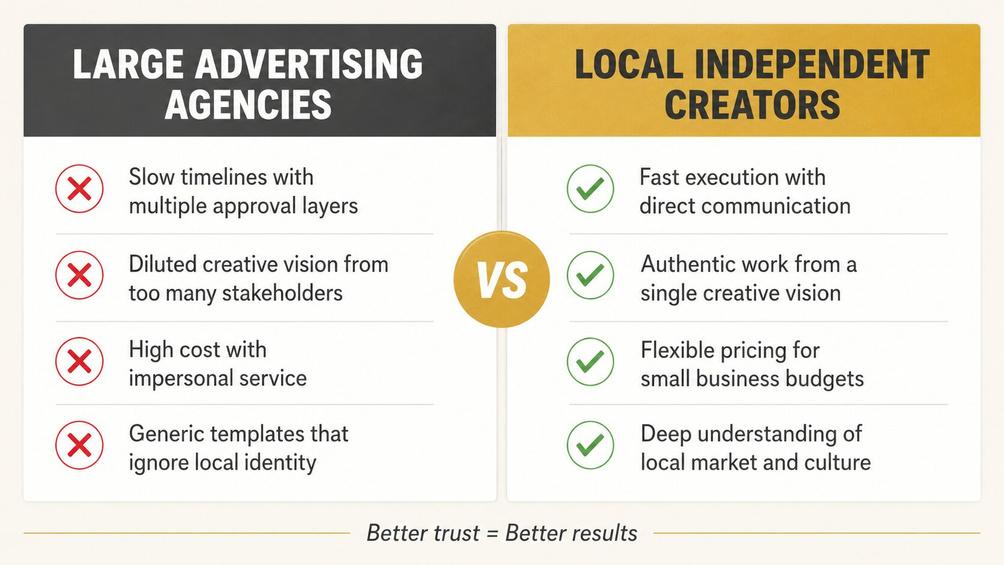
The reason comes down to trust and creative autonomy. Large companies subject every idea to endless critiques until nothing interesting remains. Small business owners, by contrast, hire local creatives because they trust them to deliver something distinctive and authentic.
“The ad campaigns are much less fulfilling for me personally because it’s typically working for some large company that has a lot of oversight. Any creative idea you have typically just gets critiqued into the ground and every cool idea that you’ve had is no longer fun or cool. That’s part of the reason why I left advertising. I just frankly despised that every creative idea I had was getting critiqued by some company. I didn’t feel like I was being challenged to the extent of my creativity with murals and with small businesses. They give you a lot more trust, especially locally, because they’re hoping that you have their best interest in mind and that you’ll do the most creative thing for them.”
That trust produces better work. It also produces faster results. Real small business branding and art succeed on trust alone. Local owners know their artist. The artist knows the neighborhood. The result stands out.
There is no three-month approval process with seventeen stakeholders. There is a conversation, a concept, and an execution.
For real estate professionals, this offers a clear lesson. The most successful local branding comes from local creatives who understand the market, not from generic agency templates shipped in from somewhere else.
This aligns with the downtown revitalization and real estate growth I covered in the past. When we invest in creating spaces people genuinely love, the financial performance follows.
Embracing Risk to Scale Your Capabilities
One of David’s most valuable insights came from discussing his willingness to take on projects that genuinely scared him.
His entry into large-scale murals happened during the pandemic. His brewery employer received the Payroll Protection Program and needed to use the money productively while closed. David was offered $9.50 an hour to paint. He did not know how to paint murals. He had an idea of how he might do it. But he said yes anyway.
That first project led to five, six, or seven murals in that single space. None of them exist anymore. Someone painted over them. That is part of the game. But the skills, the confidence, and the portfolio that those projects built continue generating new opportunities today.
The same principle applies to real estate. The first difficult transaction. The first commercial investment. The first renovation project. You learn by doing, and each success builds capacity for the next challenge.
This connects directly to the economic growth driving housing demand in Wichita Falls I discussed previously. When communities invest in what makes them unique, people notice and want to be part of it.
Defining Success Beyond the Paycheck
This part of the conversation challenged how I think about market success.
In real estate, we measure success through transaction volume, cap rates, and asset accumulation. David offered a completely different framework.
“I realized at a very distinct moment two or three years ago that I am getting to spend 90 percent of my day, 39 out of the 40 hours a week that I work, making art and being creative and doing things that I genuinely enjoy. And I’m able to pay the bills, go on a vacation every once in a while, and have some money left over at the end of the day. By my own metrics of just being able to have a nice, simple little life and provide for myself and my partner, by those markers, I’m a successful artist. I like to say that with or without the money, I’m going to be making art. But the pay is nice because it allows me to do bigger and better projects and put more time, resources, and energy into my own business.”
The National Endowment for the Arts has documented that artists who define success on their own terms and build sustainable business practices are far more likely to weather economic disruptions than those who rely solely on commission-based income.
North Texas Makers and Community Building
Before there was a North Texas Makers Art Festival, there was just a conversation between two frustrated artists.
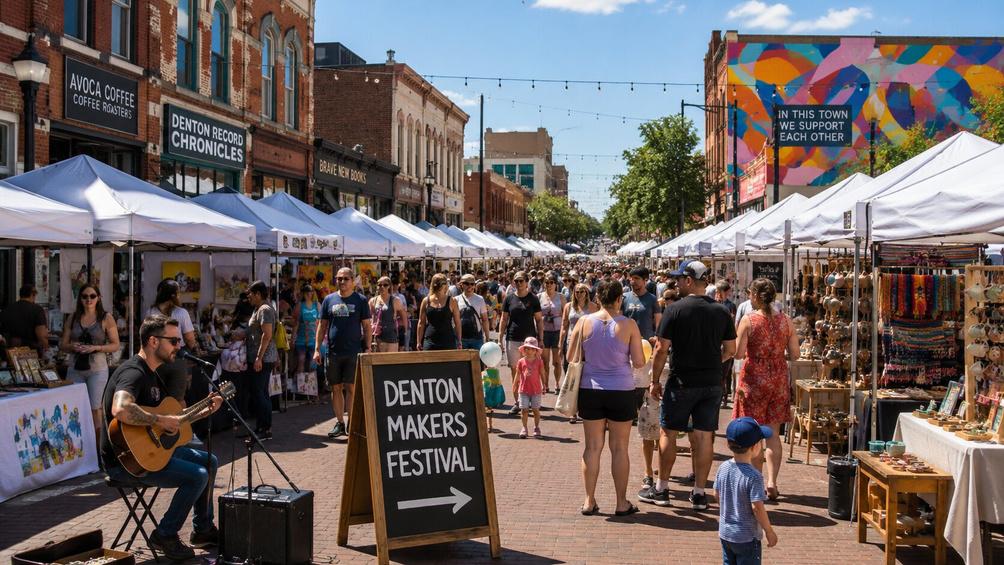
David co-founded North Texas Makers in 2019 to connect local artists with the community. The organization grew from a conversation between two artists who saw a gap when a popular local festival shut down. The logo for North Texas Makers reflects the vibrant, creative spirit of the organization.
The pandemic could have killed the idea. Instead, it accelerated their mission. When artists were struggling, North Texas Makers created opportunities for them to make money safely. That reputation for serving the community opened doors for larger events after restrictions lifted.
At its peak, the festival collaborated with Thin Line Festival, Texas’s oldest documentary film festival, to shut down downtown Denton’s square for a massive celebration of local art, music, and culture.
Practical Advice for Aspiring Creative Entrepreneurs
For anyone considering a career in the creative space, David offered direct, honest advice. He emphasized the importance of collaboration, saying that the best growth in his business came through working with others and saying yes to opportunities, whether speaking on a podcast or donating art to a charity. You never know where opportunity will come from.
He also reframed the old saying about being in the right place at the right time.
“There are more right places and right times; the better your skill set is, and the more you put yourself in the right places. So every opportunity I have now is because I know somebody and was in the right place at the right time. But I also am in those spaces as often as I possibly can be.”
The Takeaway for Real Estate Professionals
Here is what I want you to remember.
Real estate is not just about square footage, school districts, and interest rates. It is about people, culture, and the visual landscape of our towns. The neighborhoods that thrive are the ones where someone invested in making the place feel alive.
Public art increases foot traffic, raises property values, and creates the kind of authentic places where people want to live, work, and spend money. Whether you are a commercial property owner with a blank wall, a real estate investor evaluating neighborhood potential, or a local business owner looking to stand out, public art deserves a place in your strategy.
Pay attention to the people building things around you, whether in real estate, business, or the arts. Those are the people creating opportunity and quality of life. And if you own commercial property with a blank wall, consider what a mural might do for your traffic, your brand, and your community.
Connect with David Baker
You can contact David Baker directly through his website. Email reaches him at davidbakerdesigner@gmail.com. He loves talking about art. If you have a project in mind that he cannot figure out, he definitely knows someone who can.
Want to hear my full conversation with David Baker on how public art drives real estate value and community growth? Listen to our podcast episode.
Listen Here


Frequently Asked Questions
How do commercial murals impact neighborhood property values?
Public art serves as an economic catalyst by driving foot traffic to underutilized commercial areas. Increased pedestrian presence boosts retail sales, enhances district safety, and heightens consumer interest, which collectively drives up property demand and overall neighborhood valuation.
What should a business look for when hiring a graphic designer or muralist?
Look for a professional who demonstrates a strong grasp of both design principles and business operations. An elite portfolio is vital, but clear communication, a firm understanding of structural constraints, and solid contract management are what ensure a project is delivered on time and within budget. David’s professional design portfolio of over 55 client assignments demonstrates this balance.
How do local art markets support the regional economy?
Art markets and festivals create immediate micro-economies. They provide independent creators with direct-to-consumer revenue channels, bring thousands of visitors into historic downtown areas, and generate secondary spending for nearby restaurants, hotels, and local service providers.
How can I get involved in Wichita Falls community development?
Start by attending city council meetings, supporting local businesses, and exploring the economic growth initiatives driving housing demand in our area. The more residents engage, the stronger our community becomes.
Who is Tim Lockhart, and what makes him qualified to help?
Tim Lockhart is a retired U.S. Air Force Major and Certified Military Relocation Professional (MRP) who spent his final assignment as Director of Operations at the 366th Training Squadron at Sheppard AFB. Since 2012 he’s helped 300+ families buy and sell around Wichita Falls — many PCSing in or out of Sheppard AFB — using VA loans, BAH-aware budgeting, and remote-friendly tools for tight PCS timelines. See how Tim helps military families relocate to Wichita Falls →
Apply as a Guest Speaker
The landscape of our communities is evolving rapidly. Real estate is shifting, capital markets are tightening, and local culture is becoming the ultimate differentiator for thriving regions. If you are actively working to shape the built environment, revitalize neighborhoods, or solve complex challenges across development, architecture, finance, or public art, we want to feature your voice.
About Tim Lockhart
Tim Lockhart is a Wichita Falls Sheppard AFB PCS Home Selling & Exit Strategy Specialist for military homeowners. He works with active duty personnel preparing for PCS moves to help them determine the right strategy for their home—whether to sell, hold, or adjust timing—before executing the plan. Tim is a REALTOR® with Keller Williams Wichita Falls and a RamseyTrusted real estate agent. He is a retired U.S. Air Force officer with over a decade of experience helping clients navigate complex, time-sensitive real estate decisions in Wichita Falls, Burkburnett, and Iowa Park. If you have PCS orders and need a clear plan for your home, schedule a consultation to map out your next step.- How a Pink-Stained Rental Disaster Led David Edwards of CoLiving Operations to a $2,000-a-Month Housing Model - October 20, 2026
- Why JC San Pedro of Amplify Credit Union Warns Buyers Not to Spend Their Full Pre-Approval - October 5, 2026
- What Is Really Happening in the Wichita Falls Housing Market This Fall? - October 2, 2026
- Why Smokey Garrett of The GO Network Believes AI Will Make Great Agents Impossible to Replace - September 28, 2026
- Why Did a Wichita Falls REALTOR® Step Up as a Founding KW Military Ambassador in Texas? - September 24, 2026
- Kelly Thompson of Shearman Roofing and Construction Explains Why the Best Roofers Slow Down First - September 22, 2026
- Lawrence Courtien of Buffalo Property Inspections on the Inspection Mistake That Costs Buyers Thousands - September 14, 2026
- Will Clark of Clark Design Studio Reveals the One Design Choice That Saves Wichita Falls Homeowners Thousands - September 8, 2026
- How Gaby Lockhart of Barrett Financial Group Turns a Lender’s No Into a Yes for Wichita Falls Buyers - September 3, 2026
- Should Military Families Hold Real Estate as an Investment Instead of Selling It? - August 27, 2026