

Preventative upkeep and purpose-driven renovations protect your property’s value and can save you thousands over time. That is the heart of this episode of The Falls Home Front.
I sat down with Jeremy Houchens of Priority Maintenance, a North Texas contractor with more than 30 years in the trade. We talked about the maintenance, inspections, and renovation calls that keep a home or rental strong.
Jeremy, who began his career alongside his father in Southern California, now brings his expertise to the fast-growing North Texas area. I’ve collaborated with him on several renovation projects for my own rental properties, and his insights are invaluable.
We’re diving into the everyday practices, regular check-ups, and thoughtful renovation choices that help safeguard your investment as this region continues to grow. Whether you’ve got just one house or a whole bunch, these insights are for you.
Curious about this episode? Here is a quick preview of our conversation on the small habits that quietly protect your biggest investment:
Why Wichita Falls Growth Makes Property Upkeep Non-Negotiable
I have worked with Jeremy directly. He has handled renovations on several of the properties I invest in, so I knew the value he brings before we hit record. I also wanted this conversation because of where we are having it. Wichita Falls sits between the Oklahoma City and DFW metros, and both of us see the groundwork being laid for the future growth of Wichita Falls. Two new high schools. New transmission power lines over the last five years. Quiet Wichita Falls infrastructure work on water that most residents never notice.
Jeremy has watched North Fort Worth annex so much land that fields from eight years ago are now full of homes and businesses running all the way to Decatur. He expects that North Fort Worth growth corridor to reach us within 15 to 20 years. You can read more about the drivers behind that momentum in my breakdown of Wichita Falls Real Estate: Growth and Investment Opportunities, where I covered the lake revitalization and the new employers reshaping our market.
Watch the full episode here:
That future is exactly why maintenance matters now. When a community rises and property values follow, the owners who protect their asset are the ones who capture the upside. This is the kind of local story I love to share, and you can follow more of it through my Wichita Falls real estate updates on Instagram. Jeremy fills a specific niche to make protecting that asset possible. He does service calls and renovations, residential and commercial. He will hang a four by six picture for an elderly homeowner or build a custom stained box to hide a motor for a commercial client. Those small jobs build trust, and trust turns into repeat business, which is why 20 to 25 percent of his work comes from returning customers.
Dirt and Water Are the Two Enemies Quietly Damaging Your Property
The most useful thing Jeremy said early on was simple. Every property has two enemies: dirt and water. Once water gets through the exterior shell, you get interior problems you cannot see until they are expensive. That single idea sits at the core of good preventative home maintenance in North Texas.
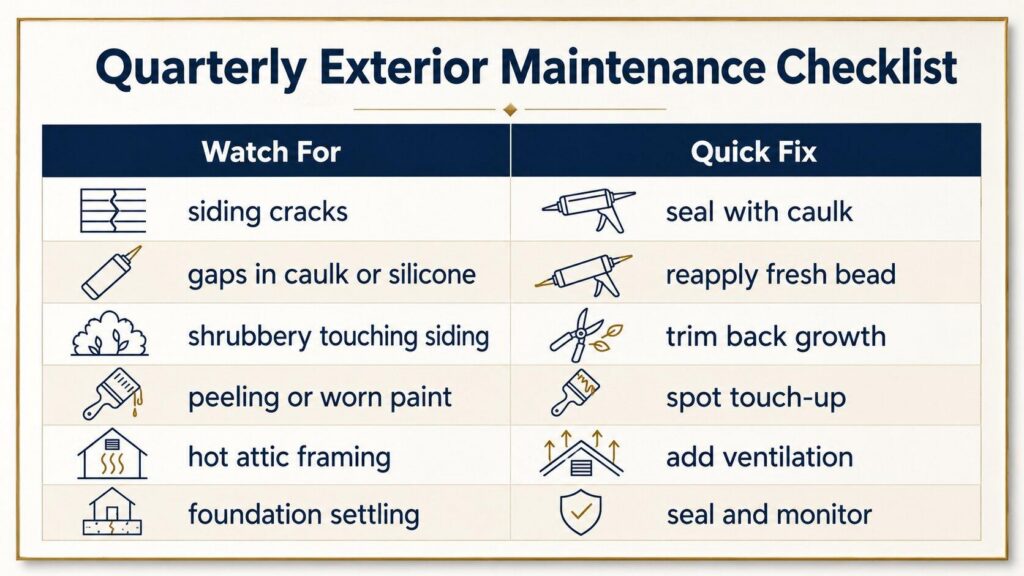
His routine is something any owner can do. Walk the exterior every quarter. Look for cracks, settling, and separation. Seal them with caulk or silicone and touch up the paint. Keep shrubbery off the siding, because plant matter holds moisture and scrapes paint away, which exposes untreated wood to rot over months and years.
The math is what makes it stick. A gallon of exterior paint, about 10 dollars in caulk, and two to four hours a year puts you ahead of 90 percent of owners. The research backs him up. Utah State University Extension notes that regular home maintenance prevents costly repairs, citing an inspector who found that spending 5 to 10 dollars on caulk can head off thousands in water damage. A little prevention protects a lot of value.
When it comes to what to inspect before buying a rental property, Jeremy points to the things most people skip. He starts with attic ventilation. If you climb into the attic and the framing feels hot to the touch, there is not enough airflow. He also checks whether the exterior has been exposed to moisture and dirt for a long time, since that can hide interior damage behind drywall. Federal guidance agrees on why this matters. The EPA and ENERGY STAR estimate that homeowners save an average of 15 percent on heating and cooling costs when they seal and insulate the attic properly. For a deeper walk-through of the systems buyers overlook, I also unpacked this in Protecting Your Home Investment: Key Inspections & Tips.
Why I Tell New Investors Not to Renovate a Rental Like Their Own Home
This was the part I most wanted new investors to hear, because it is a mistake I see all the time. When Jeremy meets a client, his first question is not about products. It is about purpose.
“The first thing I do is determine the purpose of the renovation. Is this gonna be your forever house? A house you’re gonna be living in for five years, ten years? Or a house you’re going to renovate to rent? Because I’ve cautioned several new home buyers and new investors who wanna rent out a house, and I say, you can’t get emotionally attached to a house that you’re trying to make money on because you’re not living there. It’s their first rental, and they’re like, ‘Well, I would like this,’ or, ‘I would like that,’ and it’s like, well, let’s scratch what you would like and let’s be cost-effective to maximize your potential profit. Because I’m not gonna invest in a house I’m gonna rent out the same as a house I’m gonna live in for 15 to 20 years. Those are my personal preferences, not something I’m gonna be making money on.”
Here is how I frame it. Your tenant is a customer, and different price points expect different products. A tenant paying 1,000 dollars a month expects a different home than one paying 3 or 4,000 dollars a month. New investors who renovate to their own taste tend to overspend for a tenant who never asked for it, and underspend where the property actually holds value. Getting that balance right is one of the smartest rental property maintenance decisions you can make, and it pairs well with knowing how to buy right in the first place, which I covered in Maximize Returns in North Texas Foreclosures and Tax Sales. If you want to talk strategy, you can always connect with me on LinkedIn.
The Quarterly Inspection Routine That Saves Landlords Thousands

Jeremy’s rule for rental owners is straightforward. Get eyes on the property two to four times a year, and document everything. Even if you outsource it, a 100 dollar service-call inspection done four times a year is 400 dollars that reliably prevents thousands in hidden damage. Driving by tells you a little. Walking through tells you everything. These are the rental property maintenance tips for investors that quietly protect cash flow.
The second half is documentation. Photos and video at move-in and during each inspection turn a future dispute into a settled record. Most landlords underuse this until they need it. Build a scheduled inspection into the lease, and the whole thing becomes routine instead of a fight.
Where the Best ROI Actually Hides in Home Improvements
When I asked about return on investment, Jeremy went somewhere I did not expect. Appliances. He is frustrated that modern units fail so fast, and his take on the fix is one of the more interesting best ROI home improvements ideas I have heard.
“I’ll tell you what I’m disappointed in first. Appliances, because the appliance lifespan has just drastically dwindled. It’s very frustrating for homeowners and for investors because appliances seem like they’re constantly failing. They don’t have a shelf life. My personal prediction, if people are smart, is that they’re gonna go more toward installing commercial-style appliances, because commercial appliances are made to be worked on, the parts are readily available, and they’re made to be used more frequently, so they’re going to last longer. I think people are gonna get so frustrated with appliances breaking down that they’re gonna start building kitchens around more industrial or commercial-style appliances, because they’re gonna last 20 to 30 years instead of the five to 10 years.”
His other high-return, low-cost play is attic ventilation. A powered attic fan with a thermostat runs roughly 700 to 800 dollars installed and can pay for itself in a single summer by easing the load on your HVAC, which also extends the unit’s life. Pair that with fresh weather stripping, sealed exterior surfaces, and clean silicone around wet areas, and you have protected the property cheaply. When that kind of Wichita Falls home renovation work is bigger than a weekend project, you can see the standard of finish in the Priority Maintenance project gallery before you plan yours.
How This Conversation Changed the Way I Plan Maintenance on My Rentals
What shifted for me was Jeremy’s habit of preempting instead of reacting. He treats maintenance like a schedule, not an emergency.
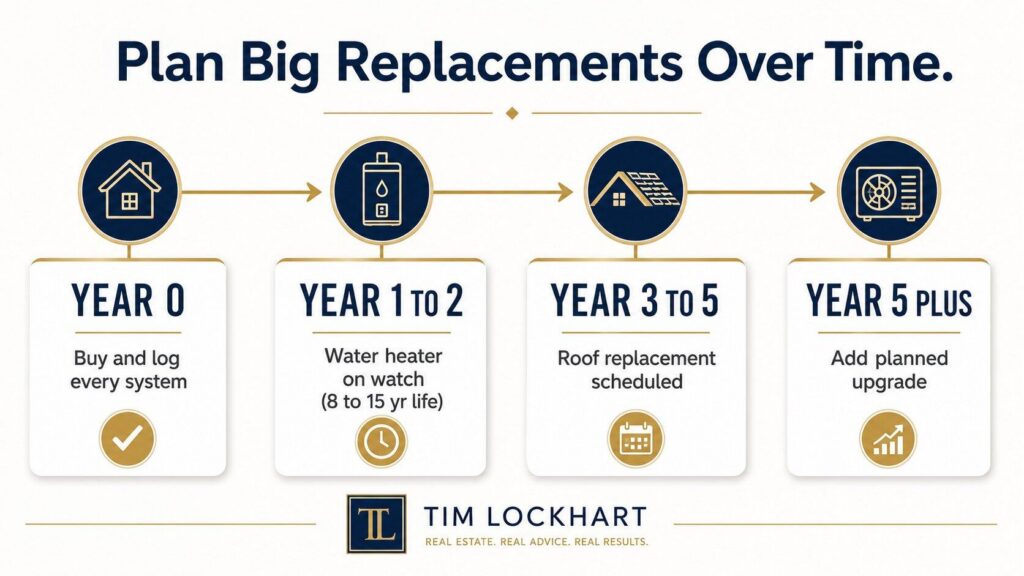
“When I bought the house three and a half years ago, I knew I was gonna have to put a roof on it. But I didn’t just immediately put a roof on it. I purposely scheduled it. I said, okay, I’m gonna put a roof on it in three to five years, and something else I wanna do, I’m gonna add in another two or three years. So you can spread out the things you need to do in your investment properties over a span of time. It doesn’t all have to be front-loaded on the front end. Now, sometimes it needs to happen that way, but not all the time. So you’re not caught unawares of, ‘Oh, I didn’t know the water heater had to be replaced.’ Had you done your due diligence, well, this is a 10-year water heater, the lifespan is eight to 15 years. Okay, I’m gonna plan for that in the next two years.”
His numbers hold up. The U.S. Department of Energy notes that water heaters typically last about 10 to 15 years, which means a planned replacement is almost always cheaper and calmer than an emergency one.
He even told his new tenant about the upcoming roof before she moved in. When anything came up, she already knew he was ahead of it, and the tenancy stayed smooth. I now plan my own portfolio the same way. Map the known replacements against realistic lifespans, spread the spend across years, and tell tenants the plan early.
Working with Jeremy Houchens of Priority Maintenance turned maintenance from a bill I dread into a schedule I control, and in a growing market like ours, that discipline is what protects long-term value. It is also a mindset that supports smart investing in Wichita Falls real estate as our North Texas economic development keeps accelerating.
Want to hear my full conversation with Jeremy Houchens, where we dive deep into practical maintenance strategies and renovation tips that can save property owners thousands? Listen to the complete podcast episode!
Listen Here


Common Questions About Protecting Your Property in North Texas
What maintenance issues do homeowners most often ignore?
The ones tied to dirt and water. Jeremy recommends a quarterly walk around the exterior. Seal cracks with caulk or silicone, touch up paint, and keep shrubbery off the siding so moisture cannot cause hidden interior damage.
How often should real estate investors inspect their rental properties?
At least two to four times a year, with photo and video documentation each time. Even at a 100 dollar service-call fee, four inspections a year is a small cost that prevents far larger repair bills and protects you in tenant disputes.
Which home improvements give the best return on investment?
Jeremy points to attic ventilation, since a powered fan can pay for itself in a summer by easing HVAC load. He also favors thorough exterior sealing and weather stripping, and, looking ahead, longer-lasting commercial-style appliances over short-lifespan consumer models.
How should I plan for big repairs like a roof or water heater?
Log every major system when you buy, then schedule replacements against realistic lifespans. Roofs and water heaters rarely fail without warning, so spreading the cost over several years keeps you out of emergency mode.
Why is Wichita Falls a smart place to own property right now?
The city is laying groundwork for long-term growth with new schools, upgraded power infrastructure, and water solutions, while the North Fort Worth corridor keeps pushing north. Owners who maintain their properties now are best positioned to capture that rising value.
Who is Tim Lockhart, and what makes him qualified to help?
Tim Lockhart is a retired U.S. Air Force Major and Certified Military Relocation Professional (MRP) who spent his final assignment as Director of Operations at the 366th Training Squadron at Sheppard AFB. Since 2012 he’s helped 300+ families buy and sell around Wichita Falls — many PCSing in or out of Sheppard AFB — using VA loans, BAH-aware budgeting, and remote-friendly tools for tight PCS timelines. See how Tim helps military families relocate to Wichita Falls →
Apply To Be a Guest on The Falls Home Front Podcast
Wichita Falls is growing fast, and the people building its future have stories worth telling. If you work in North Texas real estate, construction, finance, or property services and you solve real problems for this community, I would love to have you on. You can reach Jeremy directly to connect with Jeremy Houchens on LinkedIn or follow Priority Maintenance on Instagram to see his work in action.
Disclaimer: This episode of The Falls Home Front is for informational purposes only. Your host, Tim Lockhart, is a licensed REALTOR® in Texas. The property maintenance and renovation tips shared here do not constitute contractor, structural, or licensed-trade advice. Always consult a qualified contractor, inspector, or other appropriate licensed professional for your specific situation.
About Tim Lockhart
Tim Lockhart is a Wichita Falls Sheppard AFB PCS Home Selling & Exit Strategy Specialist for military homeowners. He works with active duty personnel preparing for PCS moves to help them determine the right strategy for their home—whether to sell, hold, or adjust timing—before executing the plan. Tim is a REALTOR® with Keller Williams Wichita Falls and a RamseyTrusted real estate agent. He is a retired U.S. Air Force officer with over a decade of experience helping clients navigate complex, time-sensitive real estate decisions in Wichita Falls, Burkburnett, and Iowa Park. If you have PCS orders and need a clear plan for your home, schedule a consultation to map out your next step.- How a Pink-Stained Rental Disaster Led David Edwards of CoLiving Operations to a $2,000-a-Month Housing Model - October 20, 2026
- Why JC San Pedro of Amplify Credit Union Warns Buyers Not to Spend Their Full Pre-Approval - October 5, 2026
- What Is Really Happening in the Wichita Falls Housing Market This Fall? - October 2, 2026
- Why Smokey Garrett of The GO Network Believes AI Will Make Great Agents Impossible to Replace - September 28, 2026
- Why Did a Wichita Falls REALTOR® Step Up as a Founding KW Military Ambassador in Texas? - September 24, 2026
- Kelly Thompson of Shearman Roofing and Construction Explains Why the Best Roofers Slow Down First - September 22, 2026
- Lawrence Courtien of Buffalo Property Inspections on the Inspection Mistake That Costs Buyers Thousands - September 14, 2026
- Will Clark of Clark Design Studio Reveals the One Design Choice That Saves Wichita Falls Homeowners Thousands - September 8, 2026
- How Gaby Lockhart of Barrett Financial Group Turns a Lender’s No Into a Yes for Wichita Falls Buyers - September 3, 2026
- Should Military Families Hold Real Estate as an Investment Instead of Selling It? - August 27, 2026