

A hailstorm can turn a quiet neighborhood into a magnet for roofing contractors overnight. Some of them are honest. Some are not, and telling the difference before you sign anything can save you thousands of dollars. Finding a reliable Wichita Falls hail damage roofing contractor starts with knowing what to look for before a storm ever hits.
On this episode of The Falls Home Front, I talked with Kelly Thompson of Shearman Roofing and Construction, who leads the sales team there, about what actually separates a trustworthy roofer from someone chasing a signature. We also got into the sales and leadership lessons that built his career, and why patience beats pressure every time.
Curious about this episode? Here’s a preview of our conversation:
The Difference Between a Contractor Who Educates You and One Who Pressures You
Kelly Thompson of Shearman Roofing and Construction is a sales manager who built his career the hard way. He knocked on doors. He took rejection. He learned what happens the moment a storm rolls through Wichita Falls: contractors show up everywhere, some legitimate, some not, and homeowners are left trying to sort out who to trust.
The Better Business Bureau has warned homeowners for years about storm chasers who lack proper local licensing and disappear once the check clears. Kelly’s approach is the opposite. He wants a homeowner to feel informed, not rushed. You can see that same philosophy across his roofing and storm restoration work, which leans on documentation over pressure tactics. It’s the same mindset behind catching costly issues during a thorough home inspection: check first, decide second.
Watch the full conversation here:
How Kelly Thompson Built a Million Dollar Roofing Sales Career on Consistency, Not Talent
Kelly has personally produced more than a million dollars in sales, and he is clear that talent had less to do with it than showing up every single day. Building sales consistency through rejection is really what carried him there. Roofing sales rewards the people who keep knocking on doors and inspecting roofs even when nothing is happening yet.
“I think that one of the biggest things for me is realizing pretty early that roofing sales rewards consistency more than anything else. You can be the most talented salesperson in the world, but if you aren’t creating opportunities every day, following up, inspecting roofs, and staying in front of the homeowners, eventually your pipeline dries up. So getting over that million-dollar mark wasn’t one big deal. It was hundreds of conversations, a lot of doors, a lot of follow-ups, and learning how to actually manage the entire process from start to finish after that contract is signed. I also started treating homeowners like there was potential for a relationship beyond the roof, because one job can turn into multiple more when they talk to their neighbor or a family member. As long as you keep that mentality and make every interaction personable, it really helps you in the entire industry.”
That pipeline discipline is worth remembering the next time you’re weighing patience against pressure in any big decision, including how you read a shifting Wichita Falls housing market before you list or buy.

What Changes When You Go From Top Salesperson to Team Leader
Kelly’s biggest lesson wasn’t in sales. It was in leadership. Selling for himself, he controlled everything. Behind on numbers? Knock more doors. Once he took on a team, the scoreboard changed. It stopped being about what he produced and became about whether his guys were developing.
Building real roofing sales leadership and team culture meant changing what he measured himself by. He learned to resist the urge to jump in and fix every mistake himself. Reps need room to fail in small, recoverable ways.
That is how they actually learn the job instead of leaning on someone else to bail them out. You can watch that culture play out in real time through Shearman’s day-to-day team updates on Facebook, where training and field work both get equal attention.
Slow Down First: What Kelly Tells Every Homeowner After a Hailstorm
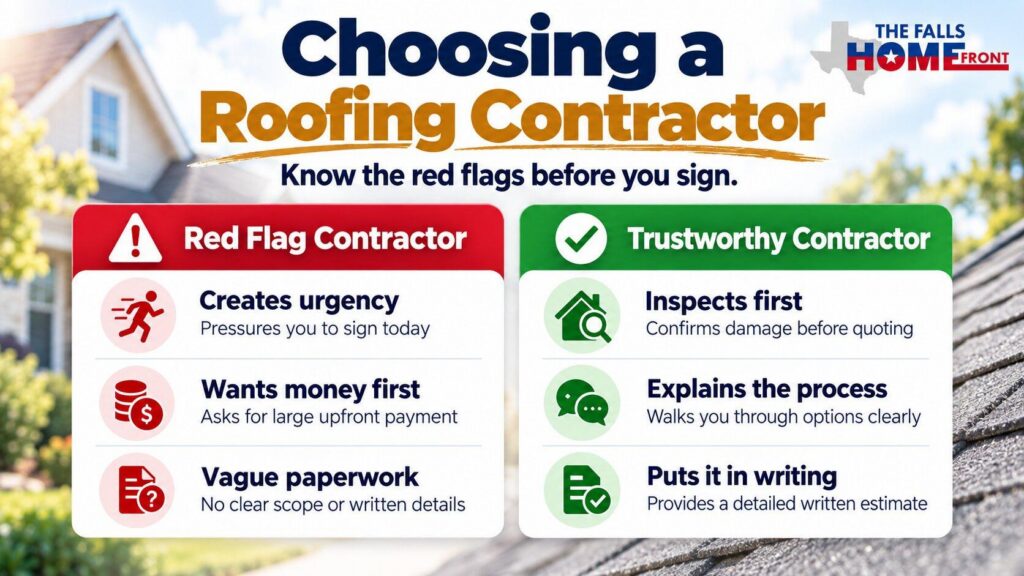
Here is the part every Wichita Falls homeowner needs to hear. When storms roll through North Texas, people can suddenly have five or six contractors knocking in a single afternoon. Kelly’s advice cuts straight through the noise.
“I think the fastest way is just to slow down, because a lot of contractors are coming in there creating urgency immediately, and the homeowner already has people left and right knocking on the door, calling, telling them the roof’s destroyed. Instead of adding that pressure to them, I want to educate them: inspect the property, document everything, tell them what you actually see, explain the damage, and if they don’t need a roof, then tell them they don’t need a roof. That conversation might not make you money today, but it builds credibility. People can tell quickly whether you’re trying to help them out or just trying to get a signature from them so you can get a contract.”
The Texas Department of Insurance offers similar guidance, encouraging homeowners to document hail damage thoroughly before filing a claim rather than rushing into a decision under pressure. Documentation protects you either way, whether you end up filing a claim or not.
The Red Flags That Tell You a Roofing Company Won’t Be Around Later
Knowing how to choose a roofing contractor after a storm comes down to a short list of warning signs. Kelly didn’t hesitate when I asked what to watch for.
Cash payment requests top the list. So does any contractor who offers to cover your insurance deductible, since that’s usually not legal and often ends with the homeowner billed for it later anyway. A credible roofer will have a license, photos of past work, and real reviews. Fly-by-night companies show up for a few weeks after a storm and vanish long before a problem surfaces six months later.
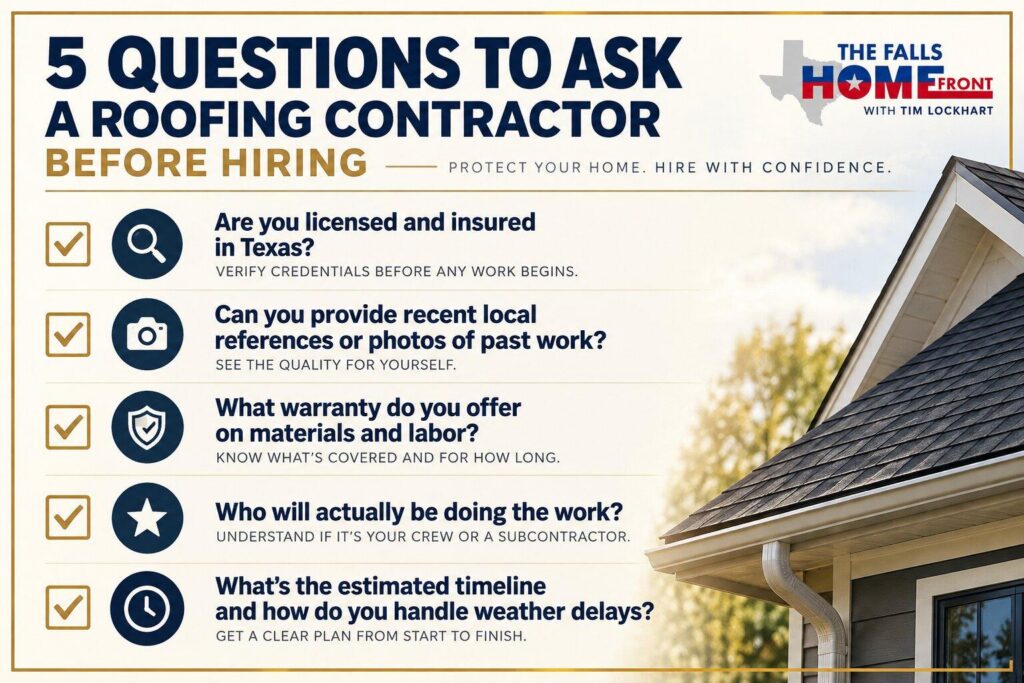
Why Kelly Treats Every Homeowner Like a Long-Term Relationship, Not a One-Time Job
This is the part of the conversation that stuck with me most. Kelly doesn’t think in single transactions.
“One transaction has a ceiling and a relationship does not. So one homeowner may be a roof, but a homeowner who trusts you might introduce you to five neighbors, a family member, a realtor, a business owner. I think that creating trust with them and valuing them as a customer through the entire step of the process, it’s almost like you’ve got to nurture the relationship that you have with each and every homeowner. For me, if it’s after the job’s done, I might crumble a cookie and come bring it over there and talk to the homeowner, let them know I appreciate working with them, and that I’ll be back in six to eight months to check on them. I try and keep that relationship going with every single homeowner that I have, and it’s the same steps that I tell my guys to do.”
That follow-up instinct matters for more than roofing. A roof in good shape protects the same equity that comes into play when deciding whether to hold or sell a property down the road. Kelly posts some of that ongoing homeowner care on his Instagram, where you can see the projects and the follow-ups both.
Roofer or Insurance Company First: Kelly Settles the Debate
A hailstorm hits, and the first phone call a homeowner makes often shapes the whole process. Deciding roofer or insurance company first after storm damage comes down to one simple rule: call a roofer first. A roofer can assess real damage before you file, and that matters because your deductible could end up higher than the payout if the damage turns out to be minor.
That gap is bigger than most homeowners expect. Wind and hail deductibles across Texas now commonly run between one and five percent of a home’s insured value, and on a $400,000 home, a two percent deductible means covering the first $8,000 yourself. The Texas Department of Insurance also recommends asking your carrier directly how your policy actually pays for roof damage, since some policies pay full replacement cost while others reduce coverage based on the roof’s age.
Kelly also pointed out something most homeowners never think to ask: if you know someone in the industry, have them walk the roof with your adjuster. An extra set of trained eyes catches damage that gets missed otherwise, the same way choosing the right design details up front keeps a renovation from turning into a costly redo.
Wichita Falls homeowners deal with storms every single year, and knowing how Kelly Thompson of Shearman Roofing and Construction approaches this decision gives you a real advantage before the next one rolls through.
Want to hear my entire conversation with Kelly Thompson of Sherman Roofing and Construction about slowing down after a hailstorm, spotting contractor red flags, and building trust through honest sales? Listen to our podcast episode!
Listen Here


FAQ Section
What should I do first after a hailstorm hits my Wichita Falls home?
Walk the exterior once it’s safe and check gutters and window screens for visible damage, then call a reputable roofing company for a free inspection instead of climbing onto the roof yourself.
Should I call a roofer or my insurance company first?
Call a roofer first. They can assess whether the damage is significant enough to justify a claim, since filing when the damage is minor can leave you paying more out of pocket than your deductible covers.
What are the biggest red flags when hiring a roofing contractor after a storm?
A contractor asking for cash payment or offering to cover your insurance deductible for you. Both signal a company that won’t stand behind the work later.
Who is Tim Lockhart, and what makes him qualified to help?
I’m a retired U.S. Air Force Major and a Certified Military Relocation Professional (MRP), and my final assignment was Director of Operations at the 366th Training Squadron at Sheppard AFB. Since 2012, I’ve helped more than 300 families buy and sell homes around Wichita Falls, including many PCSing in or out of Sheppard AFB, using VA loans, BAH-aware budgeting, and remote-friendly tools built for tight PCS timelines. See how Tim helps military families relocate to Wichita Falls
Apply As A Guest On The Falls Home Front Podcast
Wichita Falls and North Texas are full of people building something worth talking about, whether that’s a sales team, a growing business, or a reputation earned one honest conversation at a time. If you’re solving real problems for homeowners, buyers, or your community, I want to hear your story.
Kelly built his career the same way, one honest conversation and one earned relationship at a time, and that’s exactly the kind of story this podcast exists to share. If your work reflects that same patience and integrity, I’d love to have you on.
DISCLAIMER: This content is for informational and entertainment purposes only. Tim Lockhart is a licensed REALTOR® in Texas, and the roofing and insurance guidance shared in this episode does not constitute contractor, roofing, or insurance advice. Consult a licensed roofing contractor or insurance professional for your specific situation.
About Tim Lockhart
Tim Lockhart is a Wichita Falls Sheppard AFB PCS Home Selling & Exit Strategy Specialist for military homeowners. He works with active duty personnel preparing for PCS moves to help them determine the right strategy for their home—whether to sell, hold, or adjust timing—before executing the plan. Tim is a REALTOR® with Keller Williams Wichita Falls and a RamseyTrusted real estate agent. He is a retired U.S. Air Force officer with over a decade of experience helping clients navigate complex, time-sensitive real estate decisions in Wichita Falls, Burkburnett, and Iowa Park. If you have PCS orders and need a clear plan for your home, schedule a consultation to map out your next step.- Kelly Thompson of Shearman Roofing and Construction Explains Why the Best Roofers Slow Down First - September 22, 2026
- Lawrence Courtien of Buffalo Property Inspections on the Inspection Mistake That Costs Buyers Thousands - September 14, 2026
- Will Clark of Clark Design Studio Reveals the One Design Choice That Saves Wichita Falls Homeowners Thousands - September 8, 2026
- How Gaby Lockhart of Barrett Financial Group Turns a Lender’s No Into a Yes for Wichita Falls Buyers - September 3, 2026
- Should Military Families Hold Real Estate as an Investment Instead of Selling It? - August 27, 2026
- What Ian McMurtrie and Rita Beemen of Raconteur Press Taught Me About Owning Your Own Story - August 26, 2026
- Is a VA Loan Really Weaker Than a Conventional Offer for Wichita Falls Sellers? - August 24, 2026
- What Do July 2026’s Wichita Falls Housing Numbers Mean for Home Sellers Near Sheppard AFB? - August 20, 2026
- Stephen Barton of Core Community Mortgage on Why Waiting Costs You More Than Failing - August 19, 2026
- What Happens If You Price Your Home Too High Before a PCS Move From Sheppard AFB? - August 17, 2026