

Where our food comes from is one of the most important decisions we make for our families. I recently sat down with Mark and Tara Dora of Valley View Meat Company to explore the connection between the land, our livestock, and our long-term health.
Mark shared how shifting to nutrient-dense food cleared his brain fog and boosted his energy. Tara hasn’t bought grocery store meat in 20 years. They are building a local food system in Iowa Park that prioritizes soil health, animal welfare, and transparency.
This is part of my ongoing mission on The Falls Homefront to help our Wichita Falls community thrive, not just in finding a home in Wichita Falls, but in life.
Tune in to the full episode:
Cultivating Community: Why Food Security Matters to North Texas
As the host of The Falls Homefront, I am always looking for ways to help our community thrive. I wanted to have this conversation because where our food comes from is one of the most important decisions we make for our families.
Mark and Tara Dora from Valley View Meat Company aren’t just ranchers. They are stewards of a family legacy that spans generations. You can learn more about their journey on their about page for Valley View Meat Company. They have built their business around transparency and sustainability. I wanted to dig into why they shifted from a traditional ranching model to a direct-to-consumer approach that prioritizes soil health and animal welfare.
When you are ready to put down roots in a community that values this, understanding what it’s really like to live in Wichita Falls is the first step.
Food as Medicine: A Shift in Perspective
One of the most impactful parts of our talk was Mark’s personal health journey. He shared how shifting to a nutrient-dense, natural diet cleared his brain fog and boosted his energy. These are the real nutrient dense meat benefits—feeling sharper, more focused, and fully alive. Tara hasn’t bought grocery store meat in 20 years because they believe so strongly in raising their own.
The Science of Regenerative Ranching
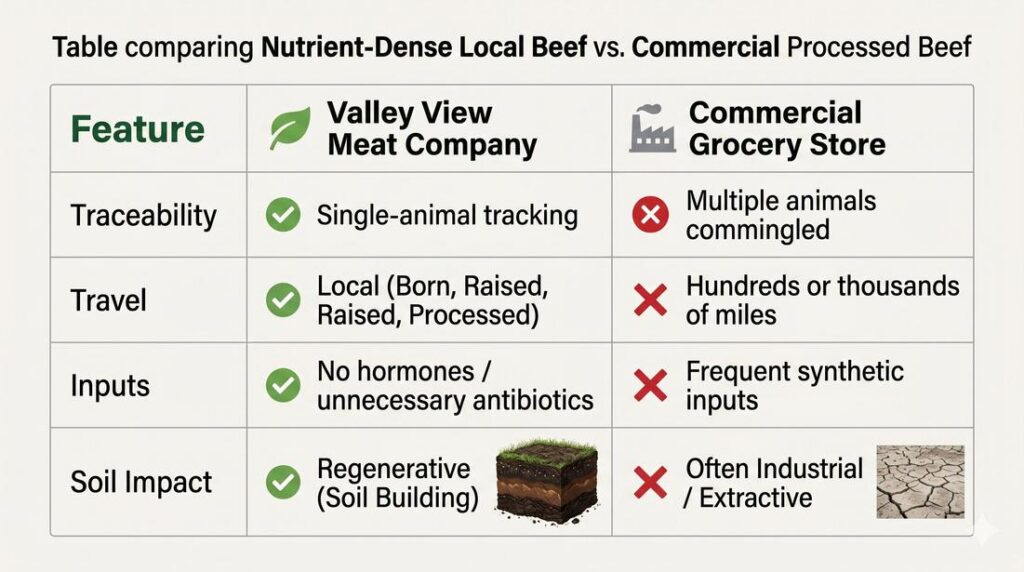
Valley View Meat Company founders Mark and Tara Dora broke down the concept of regenerative agriculture in North Texas in a way that truly clicked for me. It is about making the farm self-sufficient by focusing on the “microbiome” of the soil. When the soil is healthy, it acts like a sponge, which is critical for our North Texas droughts.
By using rotational grazing benefits, they move their herd systematically to ensure plants aren’t overgrazed. This allows root systems to grow deep, reaching moisture that shallow roots in overgrazed fields simply can’t find. This method is supported by data from the USDA Natural Resources Conservation Service, which highlights soil health as the foundation for sustainable agriculture.
"Healthy soil is like a sponge. Think of your kitchen sink and a sponge—it will absorb water and hold it. Healthy soil will do the same thing. Soils that are not healthy, that are compacted, that are continually plowed or farmed, don't have that water absorption capability. So then you have lots of runoff. Our goal is to hold as much of that moisture as possible by soaking it up like a sponge, which carries over into those plants that have deeper root systems to utilize when July and August get here, when it's extremely hot and dry."
This is vital for sustainable ranching Texas. If we don’t have that absorption and the water runs off, we carry sediment into our lakes. We lose water on our farm.
Why Local Sourcing Changes the Quality
A major perspective shift for me was learning about the “stress” factor in meat quality. Mark explained that commercial cattle travel long distances. From birth to feed yard to packing house. That stress changes the chemical makeup and taste of the meat.
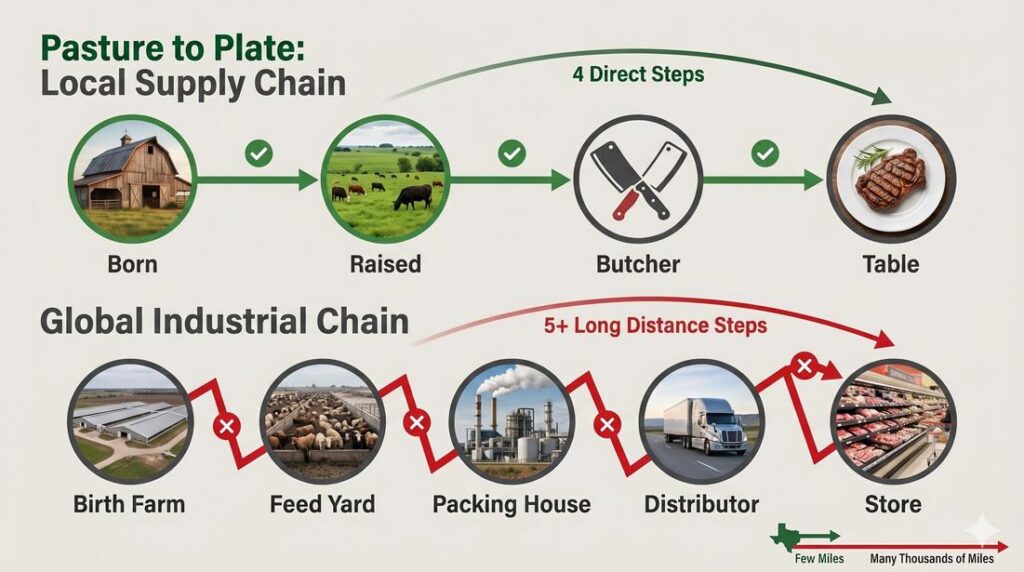
At Valley View, all cattle are born, raised, and go straight to the butcher. You can see examples of their commitment in products like their all-natural extra lean ground beef. If you have questions about their process, the Valley View Meat Company FAQs provide answers about sourcing, packaging, and local pickup.
"Stress, no different than the human body, your body or mind—when we're under stressful situations, we do things differently, we act differently, we feel differently. The animal is no different. So stress is extremely important to us to maintain an animal with the least amount of stress possible. If you get high levels of stress in an animal, you're going to have a completely different taste quality to that meat. We focus a lot on that stress part of it, while also ensuring all cattle are born here, raised here, and go straight to the butcher and come straight back to me."
Building a Resilient North Texas
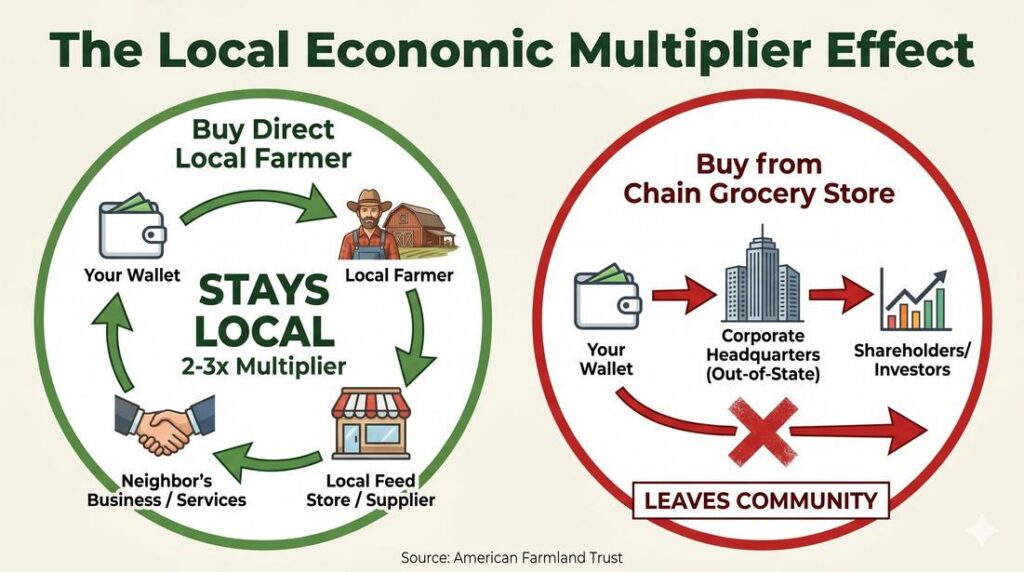
Mark and Tara Dora behind Valley View Meat Company, are firm believers that we can feed the world this way, but it requires more people to get “tied back to the land.” As Wichita Falls grows, having local food systems in Wichita Falls provides us with security and resiliency.
I asked Valley View Meat Company owners Mark and Tara Dora about the future of agriculture as North Texas grows. They pointed out that we have outsourced so much that we are handicapped. People are starting to realize that even at the local level, we can have a say. A husband and wife with three kids can produce way more food than they can consume. It doesn’t take a lot of families to start this mindset.
What Changed for Me After This Conversation
After talking with Mark and Tara Dora of Valley View Meat Company, I think differently about the “expense” of local food. Mark made a great point about nutrient density. When the food is higher quality, you don’t need to eat as much to feel full and nourished.
Many families looking to settle here are also looking for Wichita Falls real estate to build wealth and find their dream home. Part of that wealth is community health and knowing where your food comes from. Mark’s perspective on food as preventative medicine aligns with research from the Weston A. Price Foundation on nutrient-dense whole foods.
"I hear a lot that eating organic food or pure, healthy, natural food is too expensive. But really, I think if you understand the term of nutrient density, you really start to focus on the fact that you don't have to eat as much. Processed foods you can eat and eat and not feel full or get a benefit. With nutrient-dense foods, you don't have to consume as much, and you get more benefits. When you consider that, along with the medical problems that come with processed foods, it's truly cheaper to eat good food."
Mark also encourages people to start small. Pick one thing and change it. Cut out sodas or focus on the “Dirty Dozen.” For more information on pesticide residues in produce, visit the Environmental Working Group’s Dirty Dozen guide.
Want to hear my entire conversation with Steven Killfoil about using podcasting and AI to bridge communication gaps in North Texas? Listen to the full episode of The Falls Home Front.
Listen Here


FAQ Section
What is the “Dirty Dozen”?
The Dirty Dozen refers to a list of fruits and vegetables that typically have the highest pesticide residues. Tara recommends that if you are transitioning to a healthier diet, these are the items you should prioritize buying organic or local.
Is grass-fed beef always better?
Mark notes that while “grass-fed” is a popular marketing term, you need to ask about supplementation and the animal’s entire life cycle. Valley View focuses on being all-natural and reducing synthetic inputs. For a deeper dive into labeling, visit Consumer Reports on Grass-Fed Beef.
Can I visit the ranch?
Yes. Mark and Tara are very open to visitors, school groups, and farm tours. They are also remodeling an old farmhouse into a store where they will soon host classes on bread making, butter making, and cheese production.
Who is Tim Lockhart, and what makes him qualified to help?
Tim Lockhart is a retired U.S. Air Force Major and Certified Military Relocation Professional (MRP) who spent his final assignment as Director of Operations at the 366th Training Squadron at Sheppard AFB. Since 2012 he’s helped 300+ families buy and sell around Wichita Falls — many PCSing in or out of Sheppard AFB — using VA loans, BAH-aware budgeting, and remote-friendly tools for tight PCS timelines. See how Tim helps military families relocate to Wichita Falls →
Final Thoughts
North Texas is evolving. Capital is shifting. Our communities are growing faster than ever before.
A huge thank you to the Crossroads Podcast with Steven Killfoil for sharing this time with us on The Falls Home Front. If you enjoyed this conversation, you can find Steven’s full archive of local business owner interviews in Cross Roads and his episodes on small-town growth and commercial development on his Crossroads Podcast homepage.
If you are planning to buy or sell a home in Wichita Falls, or if you are a military family with PCS orders to Sheppard AFB, reach out to me directly. I will help you understand your options and build a military housing market strategy near Sheppard AFB that works for your timeline. You can contact me through my website at TimLockhartHomes.com.
If you found this episode helpful, please subscribe to The Falls Home Front and share it with a neighbor who is new to North Texas.
Apply as a Guest on The Falls Homefront Podcast
Are you a local business owner, rancher, entrepreneur, or community builder with a story worth sharing? Apply to be a guest on The Falls Homefront. It is a great way to share your expertise, highlight what makes North Texas strong, and inspire families in Wichita Falls and Iowa Park to live healthier, more connected lives.
*This podcast is produced by the Icons of Real Estate – #1 Real Estate Podcast Network. For more resources on growing your show or refining your message, explore the podcast framework and read success stories from other industry professionals who have leveraged this platform, or apply to be a guest.*
About Tim Lockhart
Tim Lockhart is a Wichita Falls Sheppard AFB PCS Home Selling & Exit Strategy Specialist for military homeowners. He works with active duty personnel preparing for PCS moves to help them determine the right strategy for their home—whether to sell, hold, or adjust timing—before executing the plan. Tim is a REALTOR® with Keller Williams Wichita Falls and a RamseyTrusted real estate agent. He is a retired U.S. Air Force officer with over a decade of experience helping clients navigate complex, time-sensitive real estate decisions in Wichita Falls, Burkburnett, and Iowa Park. If you have PCS orders and need a clear plan for your home, schedule a consultation to map out your next step.- How a Pink-Stained Rental Disaster Led David Edwards of CoLiving Operations to a $2,000-a-Month Housing Model - October 20, 2026
- Why JC San Pedro of Amplify Credit Union Warns Buyers Not to Spend Their Full Pre-Approval - October 5, 2026
- What Is Really Happening in the Wichita Falls Housing Market This Fall? - October 2, 2026
- Why Smokey Garrett of The GO Network Believes AI Will Make Great Agents Impossible to Replace - September 28, 2026
- Why Did a Wichita Falls REALTOR® Step Up as a Founding KW Military Ambassador in Texas? - September 24, 2026
- Kelly Thompson of Shearman Roofing and Construction Explains Why the Best Roofers Slow Down First - September 22, 2026
- Lawrence Courtien of Buffalo Property Inspections on the Inspection Mistake That Costs Buyers Thousands - September 14, 2026
- Will Clark of Clark Design Studio Reveals the One Design Choice That Saves Wichita Falls Homeowners Thousands - September 8, 2026
- How Gaby Lockhart of Barrett Financial Group Turns a Lender’s No Into a Yes for Wichita Falls Buyers - September 3, 2026
- Should Military Families Hold Real Estate as an Investment Instead of Selling It? - August 27, 2026