
What if the one call you’re avoiding right now is the one that actually saves your credit?
Should you fight foreclosure alone, or let the bank help you find a way out? The short answer is that most homeowners have more leverage than they realize, and the earlier they use it, the better their outcome.
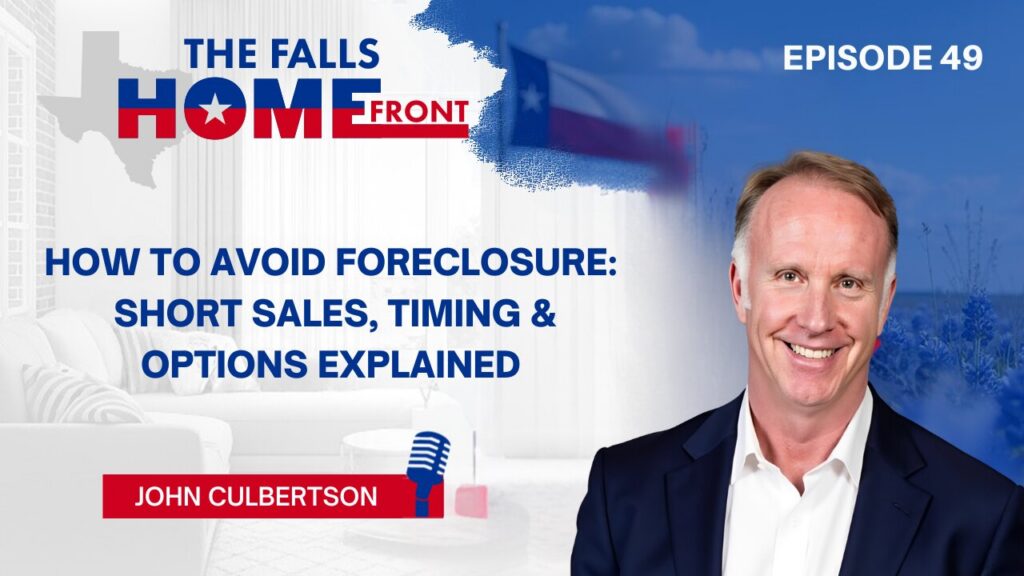
That’s the conversation I had with John Culbertson, a Distressed Real Estate Specialist in Texas with more than 30 years of experience helping people navigate exactly this situation.
We talked about what a short sale actually looks like from the inside. We also covered how much time homeowners really have once a payment gets missed.
Curious about this episode? Check out the snippet of this conversation on our shorts for a quick preview before you dive in:
What Made Me Want to Have This Conversation
I’ve had listeners tell me they felt completely alone the moment they missed a mortgage payment. No one to call. Nothing to do but wait for the worst. That fear is exactly what John Culbertson, Specialist in Short Sales and Pre-Foreclosure, has spent three decades working against.
John isn’t a theorist on this topic. He went through his own short sale in the early 1990s after losing his job in Southern California. That experience is what pulled him into the industry in the first place. I wanted him on the show because homeowners across North Texas are starting to feel the same pressure he felt back then, and most of them have no idea how much time and how many options they actually have. If you want a clear starting point before you talk to anyone else, the Consumer Financial Protection Bureau’s national foreclosure prevention resources are a solid, no-cost place to begin.
Watch the full episode here:
How a Job Loss in the 90s Turned John Into a Distressed Real Estate Specialist
John’s origin story is part of what makes his advice land. He was downsized in the early ’90s, couldn’t keep up with his mortgage, and went through one of the very first short sales ever authorized in his market. He described himself as his realtor’s “guinea pig” for the process. Instead of walking away from real estate afterward, he got licensed in 1994 and built his entire career around helping other people avoid the scramble he went through.
He moved his family to Texas in 2005, rode the building boom as a developer, got hit hard by the 2008 crash, and rebuilt by going back to what he knew best: short sales. Today, John Culbertson’s distressed real estate expertise comes directly from having sat on the other side of that table himself. You can follow his work and reach him directly through John Culbertson’s Facebook page, where he shares real estate and short sale updates.

Why Short Sales Are Making a Comeback in North Texas
We’re seeing a real shift in the market right now. Foreclosure filings have been climbing nationally for several quarters, and Texas is near the top of that list. Austin has become one of the most distressed metros in the country. Wichita Falls hasn’t seen appreciation as dramatic as other Texas markets, which has softened the blow here, but the broader trend is real. Delinquencies and pre-foreclosure filings are climbing fast, even where posted foreclosures haven’t spiked yet. If you’re curious about the national numbers behind this shift, rising foreclosure filings nationwide are well documented, and the trend lines up with what John is seeing on the ground.
John explained why banks are often willing to work with homeowners instead of pushing straight to foreclosure, and this is worth every agent and homeowner understanding before their next conversation with a lender.
“The bottom line is the banks don’t do this for your own good. It’s for their own good. They lose approximately 17% less loss on their asset, their loan, if they go through a short sale versus taking it back as a repo. When they take it back, now they’re responsible for the physical asset, not just the paper, the loan. They’ve got to send out property preservation subcontractors that go out every month, check on the condition of the property, make sure nobody’s broken into it or squatting in it, and make all the repairs to keep it safe. The servicers don’t actually own the loan either, they’re just servicing it, and if the value drops below the insured mortgage insurance, they have to set aside reserves they can’t lend on. So they have a really high motivation to make these things go. It doesn’t mean they’re going to make it easy on you, but it can be done.”
That’s a critical point to remember: the bank’s incentive to negotiate isn’t goodwill, it’s math. Once you understand that, conversations with loss mitigation departments start to make a lot more sense. If you’re weighing whether a short sale process in Texas even makes sense for your situation, it helps to first understand where your home sits in the current Wichita Falls housing market, since equity position changes everything about your options.
How Long You Actually Have Once You Miss a Payment
One of the most useful things John shared was a real foreclosure timeline in Texas breakdown. From a missed payment to a courthouse steps auction typically runs about a year for government-backed loans like FHA, VA, Fannie Mae, and Freddie Mac. Private or hard money loans can move in a couple of months. Roughly 80% of homeowners fall into that longer government-backed timeline, which gives them real room to work with if they use it.
John was direct about the biggest risk in that window: waiting. Homeowners assume they have plenty of time, and then suddenly they don’t. Even once a notice of trustee sale goes out, there are still options. A short sale file, a loan modification request, or in extreme cases a bankruptcy filing can each buy critical time, though John was clear that a deed in lieu of foreclosure should be a last resort, not a first move, since it simply hands the property back without the negotiating leverage a short sale gives you.

What Homeowners Can Still Do After a Notice of Trustee Sale Arrives
Even with only three weeks before an auction, there’s still a path forward. Homeowners can contact their servicer directly and request mortgage assistance, which typically starts with a loan modification review. If a modification isn’t feasible, the servicer will usually point toward a short sale or a deed in lieu.
John also shared a story that stuck with me, and it’s a good reminder of what’s actually at stake behind these files.
“I just had a call this week, a guy. It was pretty, kind of definitely tugged at my heartstrings. A guy in his 60s lost his job like a year ago. He’s been scrambling to find a job, couldn’t find anything. He’s got his elderly mother in her 80s sick in the house, and it would be very hard on her to move. So I got on the phone and I strategized with him how he can drag the process out. He’s got to use his bankruptcy card, and I told him this is what you need to do, A, B, C, and follow these instructions, and you get more time so you can figure out where you and your mom are going to go. Most of the people I’ve helped were in the situation for things that were out of their control. The economy took a dive, they lost their job, a spouse died. I literally had a case where I was in the kitchen meeting with the husband and his wife was in the master bedroom dying of cancer. So most of my experience has been things totally out of their control.”
That’s the human side of this work. Most people John works with aren’t in this situation because of bad decisions. They’re dealing with job loss, illness, divorce, or a spouse’s death, and they need a plan more than they need a lecture. If you’re not sure where to even start putting a plan together, a step-by-step guide for navigating North Texas real estate decisions can help you understand the process even outside a distressed sale, and it’s worth reading before your first call to a lender.
Building the Right Team Before You Negotiate
John was clear that experience matters here, and homeowners shouldn’t go it alone. He recommended lining up a short sale specialist, a real estate attorney, and a tax advisor before starting any negotiation. He also warned that HUD and Fannie Mae counseling lines exist, but urged caution since those counselors ultimately work for the same system you’re negotiating against.
Watch for red flags along the way. If anyone asks for money up front, tells you to stop paying your mortgage, or pressures you to sign documents you don’t understand, that’s a warning sign worth taking seriously. The CFPB keeps an updated list of warning signs of foreclosure rescue scams, and it’s worth a five-minute read before you sign anything.
“You should try to get somebody that’s very experienced with these matters, experienced with short sales. There’s a lot of information on the internet. I have a 30-day pre-foreclosure checklist that you can use to get you prepared, and it gets you in a really good place whether you need help or not. You might be able to get out of it just with that information. It’s a good idea to talk to a lawyer, a bankruptcy attorney if it’s getting to that. If you’ve got a lot of debt and the house isn’t the only problem, you should talk to a bankruptcy attorney and probably your tax person, and see, the house is going to cause you a problem, but just get all your professionals lined up, get the best advice you can get, and get a clear path out, and a good realtor like Tim. Get information, get educated, and get a plan. You do those things, and that anxiety and despair are going to start to lift, because right now everything is a big, scary, ugly unknown. The more information you get, the better educated you are about the subject, the better you’re going to be, physically, in your situation and your personal well-being.”
John also offers a free pre-foreclosure checklist that walks homeowners through exactly what documentation and steps they need before they even talk to a realtor, attorney, or lender. You can download John’s free 30-day pre-foreclosure action plan or reach out to him directly through his Facebook page.
Taxes, Deficiency, and What You May Still Owe
One concern I hear often is whether a short sale leaves homeowners owing money or facing a tax bill. On a primary purchase-money loan, Texas lenders rarely pursue a deficiency judgment, since chasing that money usually costs more than it’s worth. Tax treatment of forgiven mortgage debt has changed over the years and is worth confirming for your specific year and situation, since exclusions tied to canceled mortgage debt have shifted with different legislation. The IRS guidance on canceled mortgage debt is the most reliable place to check current rules, and John’s advice matched mine here: talk to a tax advisor before you assume anything either way.
What This Conversation Taught Me About Helping Homeowners Move Faster
What stood out most to me is how much of this comes down to timing and information, not luck. Homeowners who start exploring their loan modification options and short sale eligibility within the first 30 to 90 days of missing a payment have dramatically more control over the outcome than those who wait.
I also think about this in the context of everything happening across our local market right now. Even with growth reshaping the Wichita Falls housing market, distressed sales haven’t disappeared, and understanding both sides of that story matters if you’re trying to make a smart decision about your own home.
“Get information, get educated, and get a plan. You do those things, and that anxiety and despair are going to start to lift, because right now everything is a big, scary, ugly unknown. The more information you get, the better educated you are about the subject, the better you’re going to be, physically, in your situation and your personal well-being.”

If you want more conversations like this one, I share North Texas market updates and stories on Instagram and connect with local professionals on LinkedIn throughout the week.
Want to hear my entire conversation with John Culbertson as we break down the short sale process in Texas, foreclosure timelines, and what homeowners can do to protect their credit? Listen to our podcast episode!
Listen Here


FAQ Section
Can a short sale stop a foreclosure that’s already started?
Yes. If a complete file is submitted to the lender’s loss mitigation department, they’re required to review it, and if the documentation is in order, they’ll typically issue a postponement while the short sale is worked through.
Will I owe taxes or still owe money to the bank after a short sale in Texas?
In most cases, no, on a primary purchase-money loan. Lenders rarely pursue a deficiency judgment, and tax treatment of forgiven mortgage debt depends on current law at the time of your sale. Confirm your specific situation with a tax advisor before assuming either way.
How soon should a homeowner start exploring their options after missing a payment?
As soon as possible. Most short sale files require the homeowner to be 90 days behind before they’re eligible, but starting the conversation with a lender or specialist right after the first missed payment gives you the most flexibility and time to work through a plan.
Who is Tim Lockhart, and what makes him qualified to help?
Tim Lockhart is a retired U.S. Air Force Major and Certified Military Relocation Professional (MRP) who spent his final assignment as Director of Operations at the 366th Training Squadron at Sheppard AFB. Since 2012 he’s helped 300+ families buy and sell around Wichita Falls — many PCSing in or out of Sheppard AFB — using VA loans, BAH-aware budgeting, and remote-friendly tools for tight PCS timelines. See how Tim helps military families relocate to Wichita Falls →
Apply as a Guest on the Falls Home Front Podcast
Real estate in North Texas is shifting fast, and conversations like the one I had with John are exactly why The Falls Home Front exists: to give homeowners real, judgment-free guidance from people who’ve actually done the work.
If you’re a realtor, investor, attorney, lender, or industry professional with real experience helping people through tough situations, I’d love to have you on.
About Tim Lockhart
Tim Lockhart is a Wichita Falls Sheppard AFB PCS Home Selling & Exit Strategy Specialist for military homeowners. He works with active duty personnel preparing for PCS moves to help them determine the right strategy for their home—whether to sell, hold, or adjust timing—before executing the plan. Tim is a REALTOR® with Keller Williams Wichita Falls and a RamseyTrusted real estate agent. He is a retired U.S. Air Force officer with over a decade of experience helping clients navigate complex, time-sensitive real estate decisions in Wichita Falls, Burkburnett, and Iowa Park. If you have PCS orders and need a clear plan for your home, schedule a consultation to map out your next step.- Lawrence Courtien of Buffalo Property Inspections on the Inspection Mistake That Costs Buyers Thousands - September 14, 2026
- Will Clark of Clark Design Studio Reveals the One Design Choice That Saves Wichita Falls Homeowners Thousands - September 8, 2026
- How Gaby Lockhart of Barrett Financial Group Turns a Lender’s No Into a Yes for Wichita Falls Buyers - September 3, 2026
- Should Military Families Hold Real Estate as an Investment Instead of Selling It? - August 27, 2026
- What Ian McMurtrie and Rita Beemen of Raconteur Press Taught Me About Owning Your Own Story - August 26, 2026
- Is a VA Loan Really Weaker Than a Conventional Offer for Wichita Falls Sellers? - August 24, 2026
- What Do July 2026’s Wichita Falls Housing Numbers Mean for Home Sellers Near Sheppard AFB? - August 20, 2026
- Stephen Barton of Core Community Mortgage on Why Waiting Costs You More Than Failing - August 19, 2026
- What Happens If You Price Your Home Too High Before a PCS Move From Sheppard AFB? - August 17, 2026
- John Culbertson Reveals What Every Texas Homeowner Facing Foreclosure Should Know - August 10, 2026